
Why is sharing so hard for young children?
A social story about sharing starts from a simple fact: sharing is learned, not switched on. For a two- or three-year-old, a toy in their hands feels like part of them. Handing it over means trusting that it will come back, and that is a big ask for a child who does not yet have a clear sense of time.
The American Academy of Pediatrics explains that around age 3 children become much less self-centered, more aware of other people's feelings, and start to cooperate more. Little by little they learn to take turns and share toys in small groups. "Of course, sometimes they won't," the AAP adds, and especially at the beginning, adults need to encourage that cooperation.
That is why this story doesn't tell Ana she must share. It shows her a way to share that feels safe: taking turns.
How to read this social story with your child
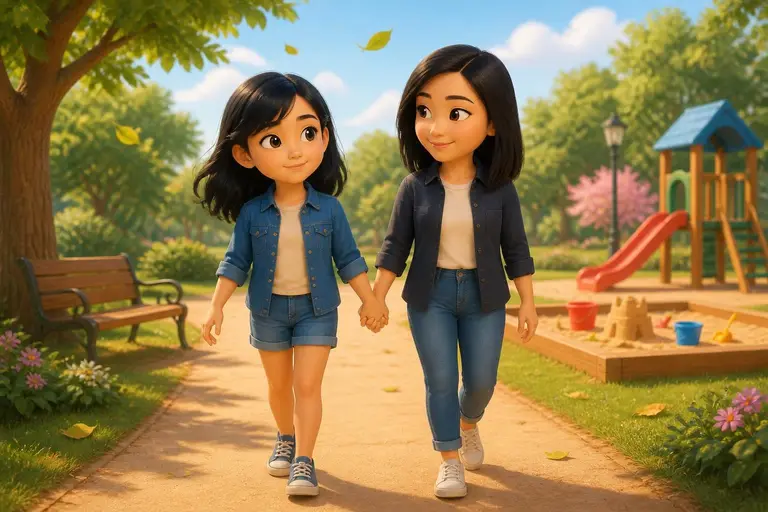
Ana and her mom walk to a small park near their house. Ana keeps her favorite blue block close, afraid that if she shares it, someone might snatch it away.
- Read it at a calm moment, not in the middle of a fight over a toy.
- Pause on Ana's worry. Ask, "Do you have a toy you don't like to share? What are you afraid will happen?" Naming the fear makes it smaller.
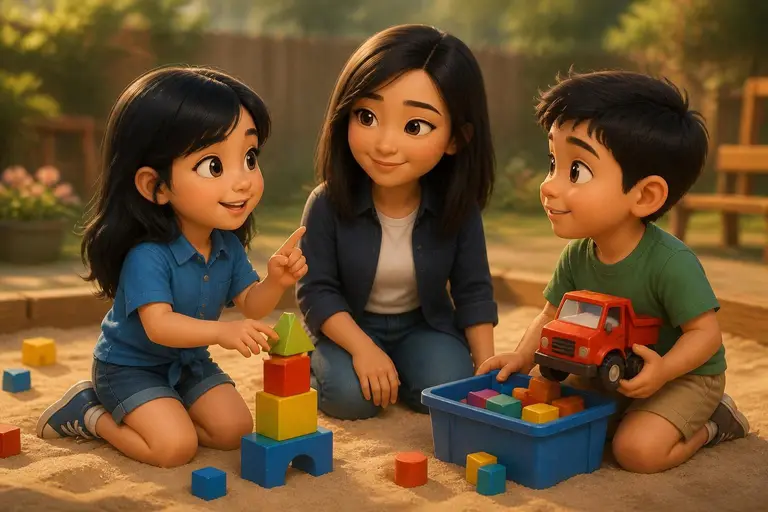
- Learn Ana's line together. When Sam arrives with a red truck and a box of blocks, Ana feels the urge to keep her blue block, but she remembers the helpful line and says, "Your turn, then my turn."
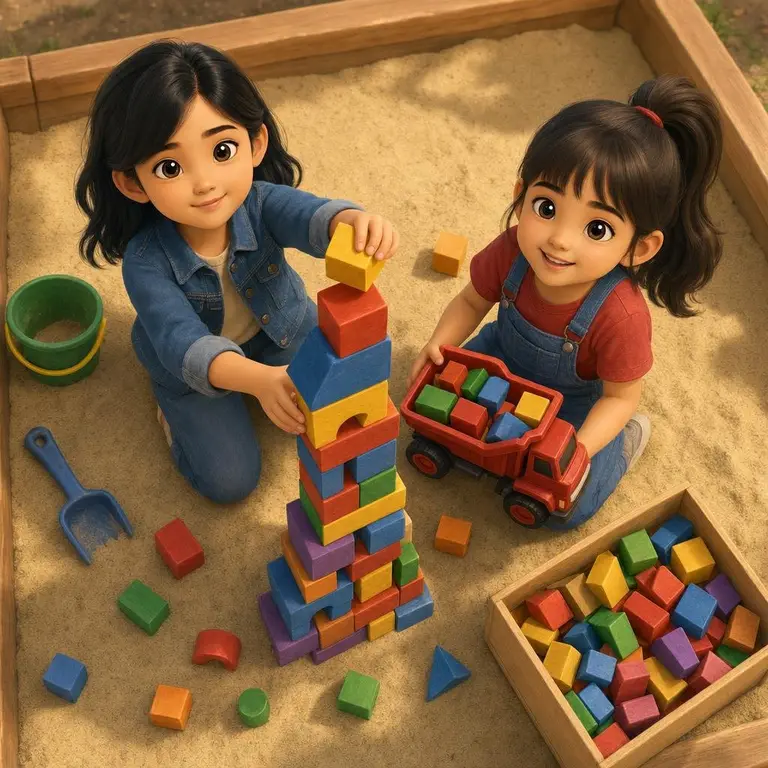
- Notice what happens next. Sam says, "Okay, I will take one." They each place a block, then another, and the tower rises higher. Ask, "Did Ana lose her block?" She didn't: the game just got bigger.
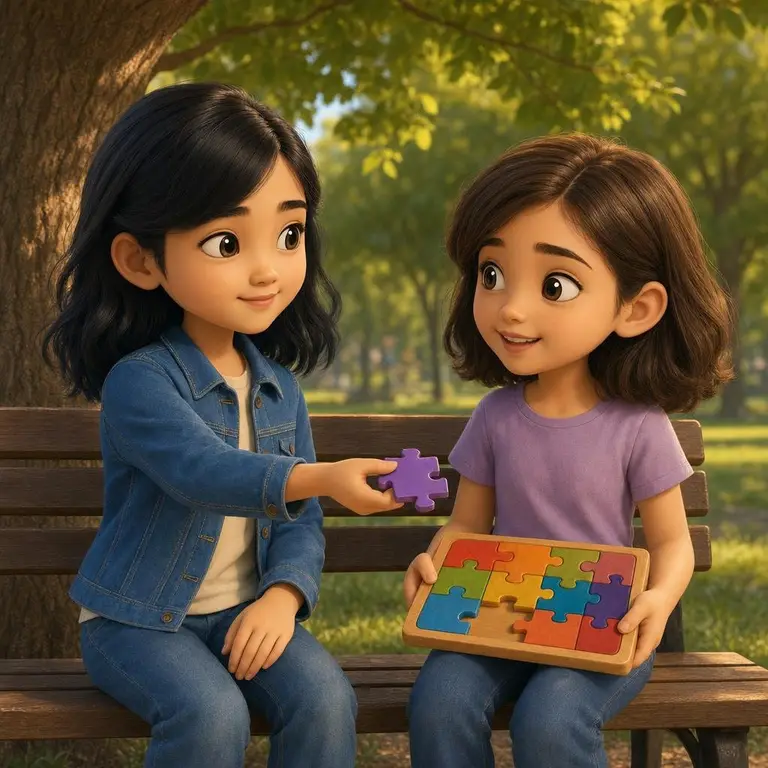
- Point out that it works again. Later Alex comes by with a puzzle and wants to start first. Ana uses the same line and hands him the first piece. Alex thanks her for waiting.
- Play it out. After reading, build a tower together saying "Your turn, then my turn" with each block. Then try it with a sibling or a friend.
Learning to share in preschool: teach turns, don't force it
"Share with your brother" is a big, vague instruction. Turns are concrete: who goes now, who goes next, and when it comes back. The AAP's tips for teaching sharing point the same way: remind children that when two kids share a toy, each gets an equal turn, help them reach a simple solution, and give them the words to describe what they feel and want.
- Name the feeling first. The CDC suggests noticing your child's emotion and naming it in simple words: "You really want the truck. Waiting is hard."
- Name the turn: "Sam's turn, then Ana's turn."
- Make waiting visible: a sand timer, a song or counting to ten.
- Protect a few special toys. Before a playdate, let your child put away one or two things they don't want to share. Everything else is for playing together.
- Praise the wait, not just the giving: "You waited for your turn. That was hard."
- Model it yourself. The AAP notes that, above all, children learn from your own example of handling conflict peacefully.
For more on waiting and turns, see our story about taking turns. If the hard part is joining in at all, our story about making friends may help.
What to say and what to avoid
| Try saying | Try to avoid |
|---|---|
| "Your turn, then my turn." | Pulling the toy out of their hands. |
| "You can have it when Sam is done." | "Share right now or we're leaving." |
| "You're worried you won't get it back. It will come back." | "Don't be selfish." |
| "You waited so well. Now it's your turn." | Making the child wait forever with no clear end. |
| "Do you want to put that one away before Leo comes?" | Forcing them to share their most special toy. |
Using this sharing story in the classroom or in therapy
Sharing comes up all day in preschool and kindergarten: the block corner, the crayons, the class bikes. Teachers can read the story to the group and use the same line, "Your turn, then my turn," whenever two children want the same thing. A visible timer or a turn card that the whole class recognizes makes the rule fair for everyone.
Speech and occupational therapists can use the story before a structured turn-taking game, so the child and the family share the same words at home and in sessions. You can read more about how NeuroStories supports schools and therapists on our page for professionals. For more books and stories on these skills, see our guide to social skills books for kids.
When to talk to a professional
Struggling to share is normal in toddlers and young preschoolers. Talk to your pediatrician if your child finds it very hard to play with other children at all, if fights over toys often turn into hitting or biting that does not improve, or if you notice other differences in how they communicate or play. They can check your child's development and guide you to the right support.
When does a personalized story help even more?
Ana's hard moment is a blue block. Your child's might be a tablet, a scooter or a baby brother who grabs everything. With NeuroStories you can create an "A challenge" story about that exact situation, with your child as the hero and their family as cartoons, using the same turn-taking words you use at home. Seeing themselves wait, take their turn and get the toy back makes sharing feel safer. It is the idea behind social stories: preview what will happen and show, step by step, how to handle it.