Why is waiting for a turn so hard for kids?
Taking turns asks a young child to do several hard things at once: hold back an impulse ("I want it now!"), cope with frustration and understand that someone else wants it too. Between ages 3 and 6 those skills are still under construction, so it is normal for your child to grab, protest or have a tantrum when they have to wait.
The good news is that it can be learned. The American Academy of Pediatrics explains on HealthyChildren.org that three-year-olds are able to work out disputes by taking turns or trading toys, but that, especially in the beginning, adults need to encourage that cooperation. The CDC suggests helping 4-year-olds learn the actual words to ask for a turn, such as "Can I have a turn?", instead of taking something from another child.
There is one more reason: for a young child, waiting is abstract. "Not now, later" does not tell them how long it will be. That is why short waits and signals they can see, like a sand timer or a turn card, help so much. Many autistic children and kids with ADHD find this kind of concrete support especially useful.
How to read this story with your child
- Read it before a trip to the playground or a playdate, not right after a fight over a toy. That way the story prepares instead of scolding.
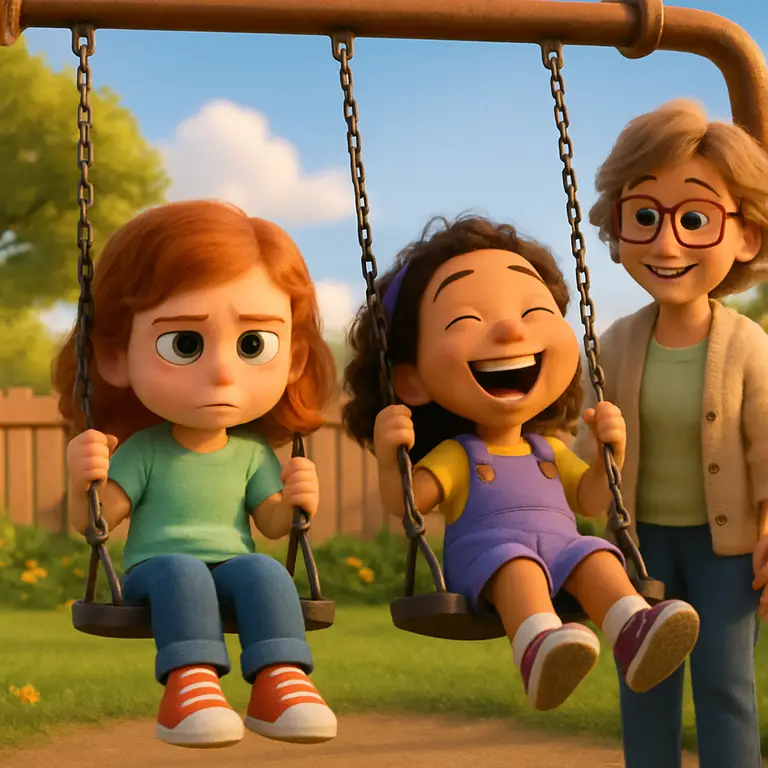
- Pause early on and ask: "How does Emma feel when Olivia is on the swing?" Naming Emma's impatience helps your child recognize their own.
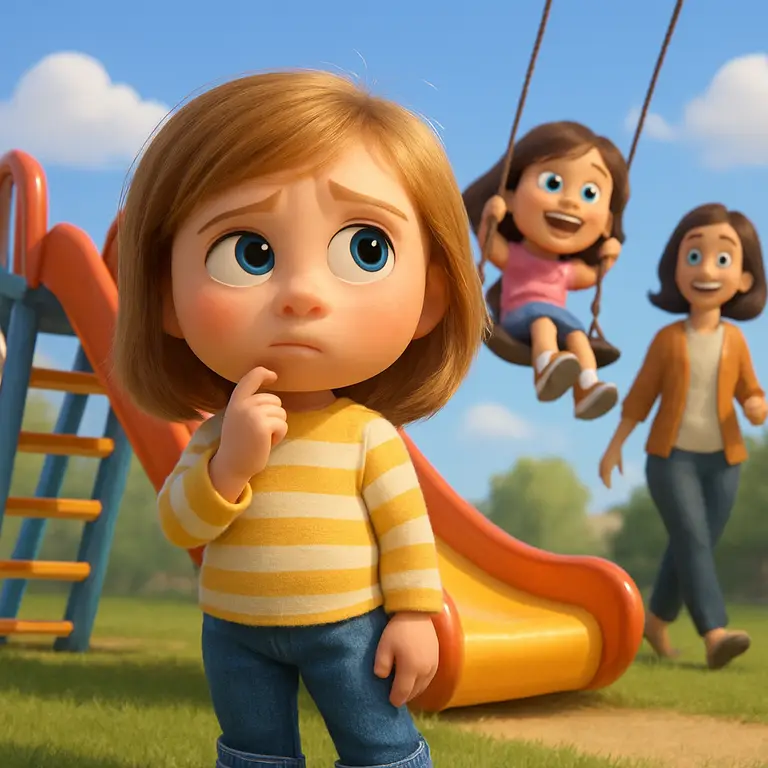
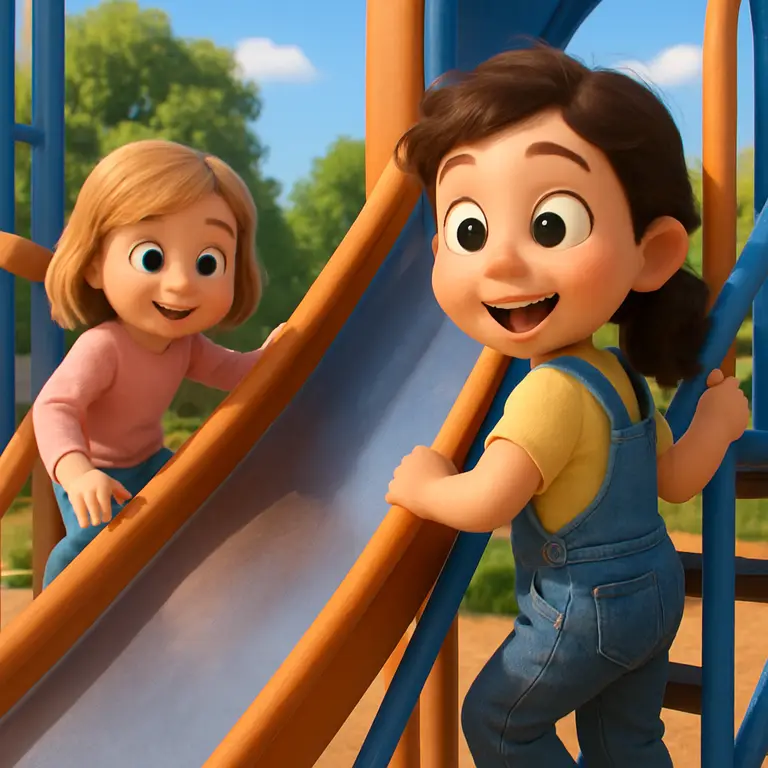
- Point out what Mrs. Thompson does. She reminds Emma that her turn will come soon and suggests the slide while she waits. Having something to do makes waiting much easier, and it is a strategy you can borrow.
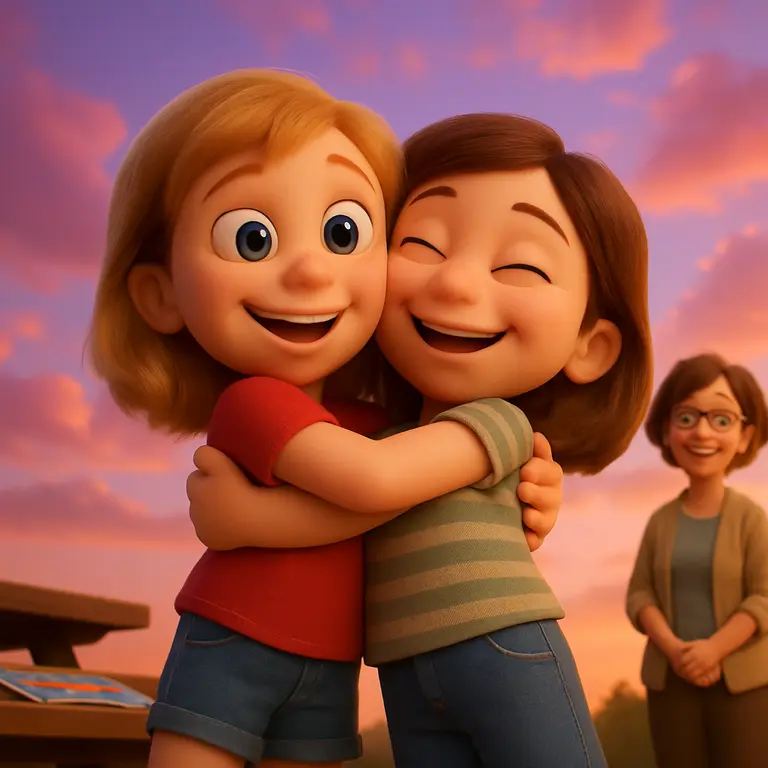
- Celebrate the turning point. When Olivia asks for the slide, Emma says, "Okay, my turn is over. You can go now." Handing over a turn without being told is the big win, and it deserves as much praise as getting one. The story never shows Emma's turn on the swing, so ask your child, "When do you think Emma gets to swing?" It is a nice way to talk about how turns come back.
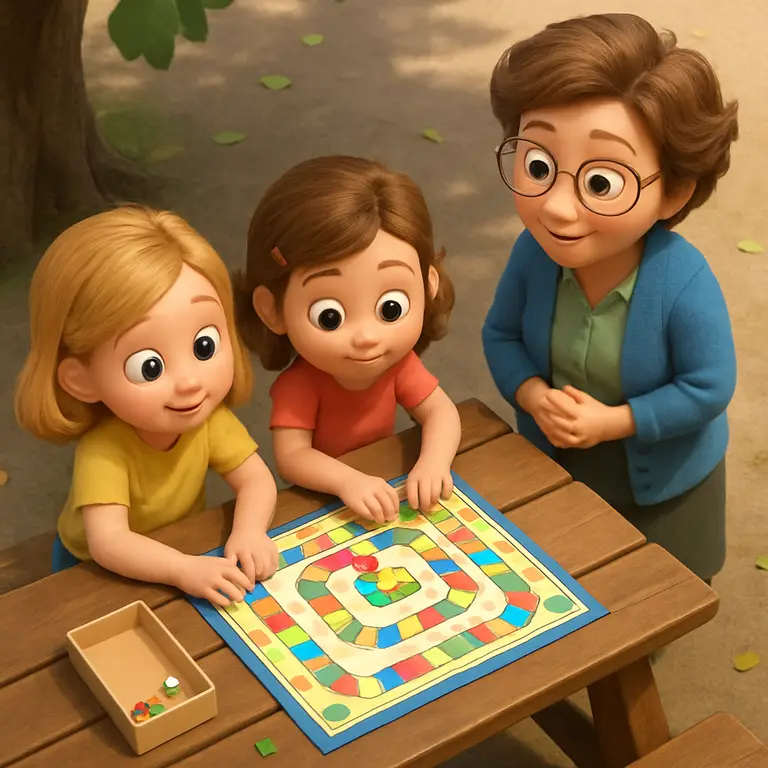
- Play it out: set up a simple board game like Emma and Olivia do, and say the story's line out loud each time the turn changes: "Then it's my turn!"
What to say and what to avoid
| What to say | What to avoid |
|---|---|
| "It's Lily's turn now, and then it's yours." | "Not now," without saying when. |
| "When all the sand runs out, it's your turn." | Long waits with no clear end. |
| "Waiting is hard. You're really frustrated." | "You're so selfish" or other labels. |
| "You gave him the ball without being asked!" | Pulling the toy away to make them "share." |
| "While you wait, want to go down the slide?" | Only noticing what they do wrong. |
What else helps kids learn to wait?
- Short turns at first. One minute on the swing, three rolls of the dice. Waiting a little and seeing the turn really arrive teaches that waiting pays off.
- A signal they can see: a sand timer, a kitchen timer or a card that passes from hand to hand ("whoever holds the card has the turn").
- Something to do while waiting: sing, count to twenty or play something else. An empty wait feels the longest.
- Simple board games where you roll and move. They practice turns in a fun setting. If the hard part comes at the end of the game, try our story about losing a game.
- Your own example: "Dad's talking now, then it's your turn" is also taking turns. Kids copy what they see.
- The same signal everywhere: if your child's preschool or school uses a phrase or gesture for turns, use it at home too.
When does a personalized story help even more?
Some children find it hard to relate to a character who does not look like them. With NeuroStories you can create an "A challenge" story about this same situation with your child as the hero, alongside a brother, a cousin or the family pet, all as cartoons. If the struggle is over the swing, the tablet or who picks the game, the story can show exactly that and end with your child waiting and handing over the turn. It is the idea behind social stories: preview the situation and show, step by step, what to do.