All stories

School and friends · · 6 min read

Story About Making Friends at School: Helping a Shy Child Enjoy Recess

A story about making friends at school helps because it shows your child, through a character with the same nerves, how to approach other kids one small step at a time. Shyness is very common in childhood, and most shy children settle in with time and support. Reading it before school and practicing simple phrases makes it more useful.

The story: «Friendship at Recess»

A real story from the NeuroStories library. Read it with your child as it is, or create it in the app with their name, your family as cartoons and the exact situation you are going through.

  1. Friendship at Recess — page 1

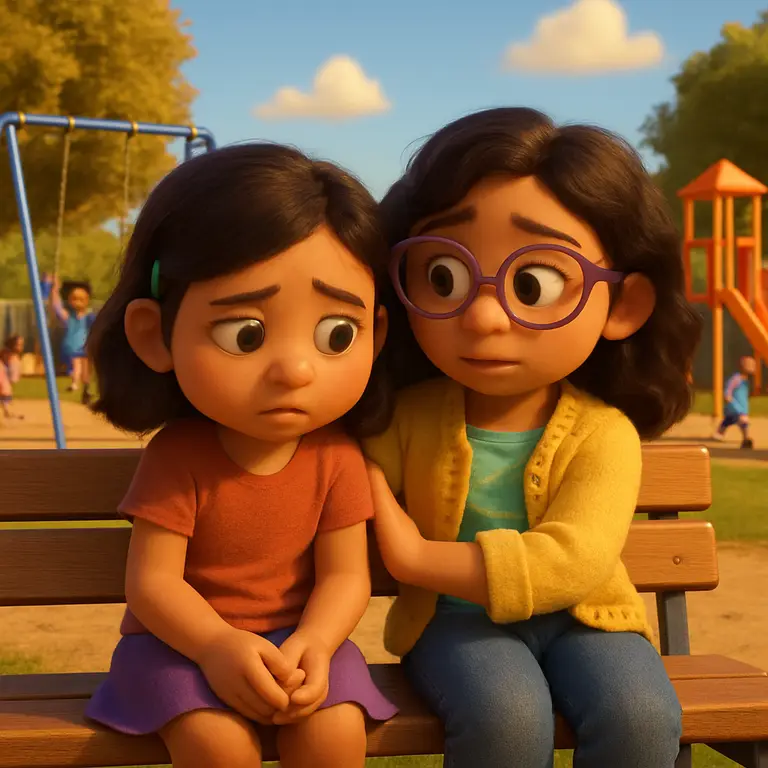
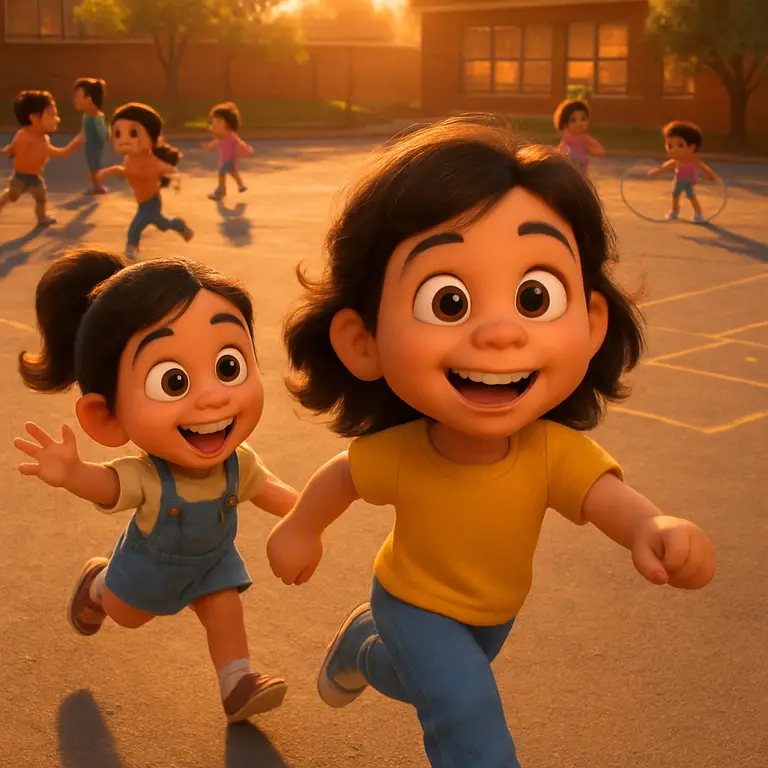
    Meet Emma, a bright and curious child who loves learning. She has a big smile and sparkling eyes, but sometimes feels nervous around her classmates. 'I don't know if I can play with them,' Emma says to her best friend, Olivia. Olivia is a kind and gentle friend who always listens and helps Emma feel better.

  2. Friendship at Recess — page 2

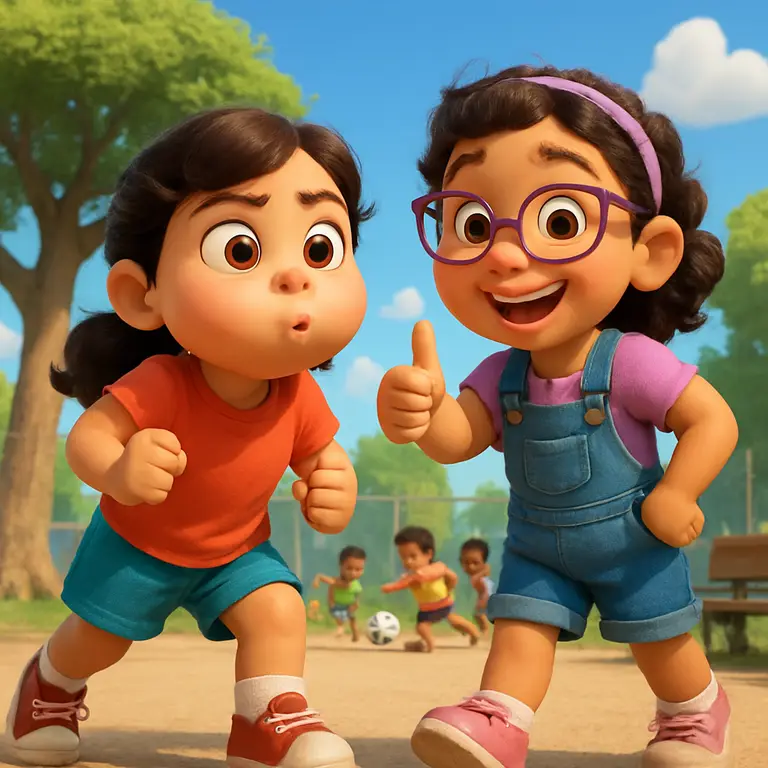
    Olivia suggests they play a game together during recess, like tag or hide-and-seek. Emma's eyes light up, and she says, 'That sounds like so much fun! But what if the other kids don't want to play with us?' Olivia smiles and says, 'We'll ask them to join us, and I'm sure they'll say yes!'

  3. Friendship at Recess — page 3

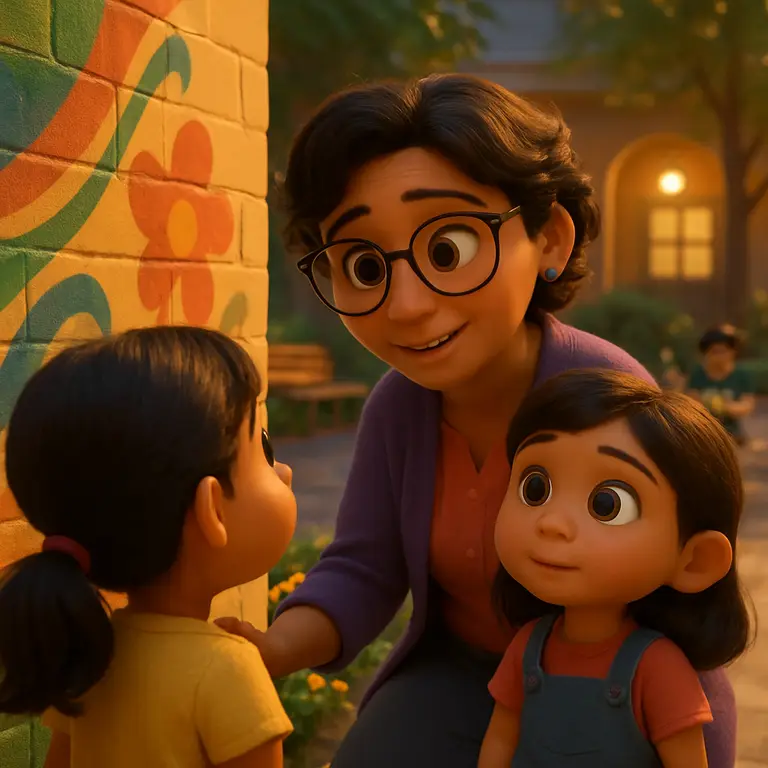
    Their teacher, Mrs. Garcia, notices Emma and Olivia looking a bit nervous. She walks over and says, 'Hey girls, what's going on? Do you need any help?' Emma explains how she's feeling, and Mrs. Garcia listens carefully. 'You know, Emma, it's totally normal to feel a little anxious sometimes. But I have an idea that might help you feel more comfortable,' Mrs. Garcia says with a warm smile.

  4. Friendship at Recess — page 4

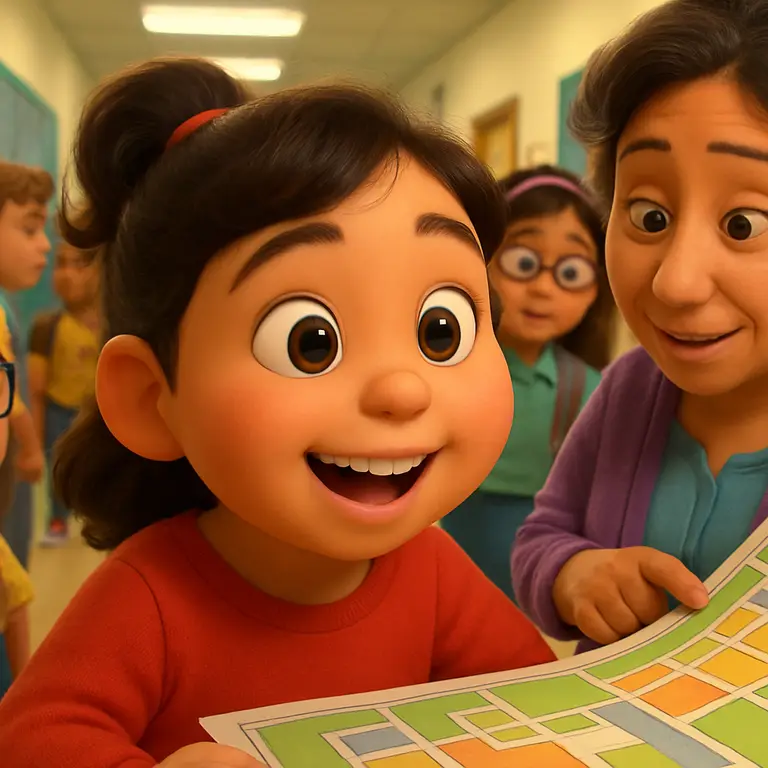
    Mrs. Garcia suggests they play a game that involves the whole class, like a big scavenger hunt. Emma's eyes widen, and she exclaims, 'That sounds amazing!' Olivia nods in agreement, and Mrs. Garcia says, 'Great! Let's get started!'

  5. Friendship at Recess — page 5

    The scavenger hunt is a huge success, and Emma has a blast playing with her classmates. She's laughing, running around, and working together with her friends to solve clues. 'This is the best day ever!' Emma exclaims, as Olivia gives her a big hug.

  6. Friendship at Recess — page 6

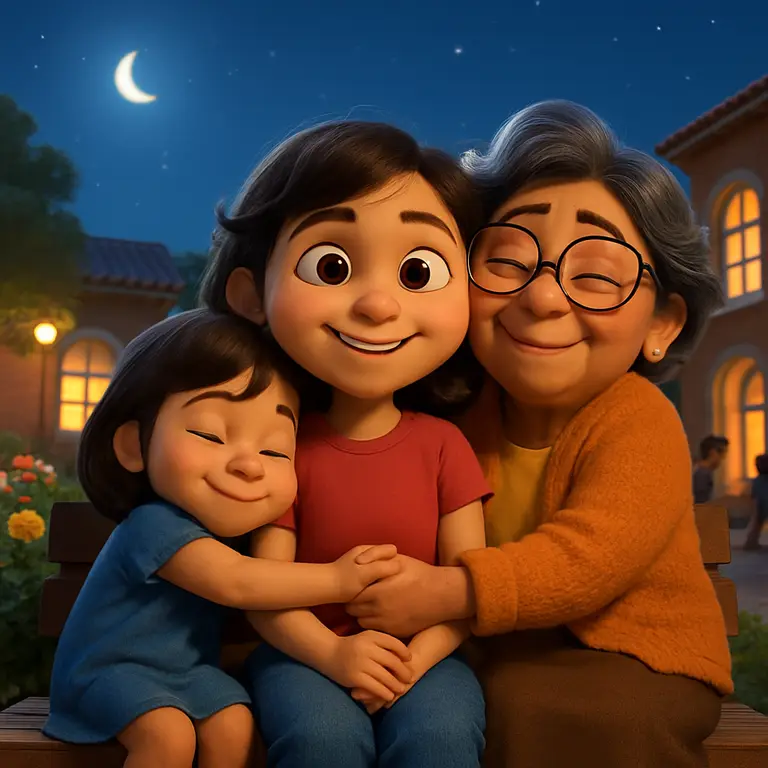
    As the day comes to a close, Emma realizes she's made new friends and had an amazing time. She thanks Olivia and Mrs. Garcia for their help and support. 'I'm so proud of you, Emma,' Mrs. Garcia says, giving her a warm hug. 'You're brave, and you can always count on your friends to be there for you.'

Why is making friends hard for your child?

Recess can be the best part of the day or the hardest. For a shy child, the playground is loud, fast-changing and mostly unstructured. Walking up to a group that is already playing and asking "Can I play?" takes a lot of courage.

The American Academy of Pediatrics, on its HealthyChildren.org site, explains that childhood shyness is commonplace and that while some children become shy after hard experiences, most are born that way. Many shy kids are unwilling or unable to make the first move, and would rather give up on a possible friendship than reach out to someone new.

The good news, from the same source: most shy children do well in relationships once they are past an initial period of adjustment, and many learn to manage their shyness over time. KidsHealth (Nemours) puts it simply: almost everyone feels shy sometimes, and taking a while to warm up to new people is not a bad thing.

It also helps to tell shyness apart from introversion. Cleveland Clinic explains that an introverted child can make friends when they want but feels happiest in their own company. Shyness, on the other hand, is about fear of rejection. That is where your support makes a real difference.

How to read this story with your child

In the story, Emma loves learning but feels nervous around her classmates. With her best friend Olivia and her teacher, Mrs. Garcia, she ends up laughing and running through a whole-class scavenger hunt.

  1. Read it before school or on the weekend, at a calm moment, not right after a rough day.
  2. Notice Emma's worry. She asks, "What if the other kids don't want to play with us?" Ask your child, "Do you ever think that too?" Naming the worry is the first step.
  3. Point out Olivia's plan. She suggests a game everyone knows, like tag or hide-and-seek, and says, "We'll ask them to join us." Having one friend by your side and a simple game in mind makes joining in easier.
  4. Talk about what Mrs. Garcia does. She notices, listens, and tells Emma it is normal to feel anxious. Ask, "Who could you tell at school if you feel nervous?"
  5. Celebrate the ending. Emma makes new friends and feels proud. Ask, "What would you like to tell me about tomorrow?"
  6. Act it out. Use stuffed animals as Emma and Olivia and practice inviting someone to play.

What to say and what to avoid

Try sayingTry to avoid
"I get it. Lots of people feel shy sometimes.""Stop being so shy" or "Why won't you talk?"
"Who would you like to play with tomorrow?"Comparing: "Your sister makes friends so easily."
"Let's practice what to say to join a game."Labeling them in front of others: "Oh, she's just shy."
"You said hi to Sam today. That was brave!"Pushing them to play with everyone all at once.

Small changes that help outside the story

  • One-on-one playdates. Cleveland Clinic suggests that, for younger kids, a play date with just one other child is often a good idea. Hosting at home gives your child a "home-field advantage."
  • Go-to conversation starters. Practice two or three ways to begin: a compliment ("I love your drawing!"), an open-ended question, or a simple "Can I play?" Rehearse until they feel natural.
  • Small steps. The Cleveland Clinic psychologist advises gently easing a shy child toward new situations rather than "throwing them off the diving board," and acknowledging each small success.
  • Model it. Your child notices how you greet neighbors or chat at school pickup. Every conversation you have is a lesson.
  • Partner with the teacher. Like Mrs. Garcia, many teachers can plan group games or pair your child with a classmate who shares their interests. The same applies in preschool or kindergarten.
  • Games with clear rules. Tag, hide-and-seek or a scavenger hunt give kids a script that makes joining easier. If losing is hard for your child, try our story about losing a game.

When a personalized story helps more

Watching another child get past their nerves helps. Seeing themselves do it helps even more. With NeuroStories you can create this story with your child as the main character, their own school, their family as cartoons and the classmate they would like to play with. They rehearse recess before they live it, which is the idea behind social stories. If saying goodbye at the school gate is also hard, try our story for separation anxiety.

Frequently asked questions

Is it normal for my child to be shy and struggle to make friends?
Yes. The American Academy of Pediatrics (HealthyChildren.org) notes that childhood shyness is commonplace and that most shy children are born that way. Most do well socially once they get past an initial adjustment period, and many learn to manage their shyness over time. They need more time, not more pressure.
How can I help my shy child make friends at school?
Start with one-on-one playdates, ideally at home where your child feels safe. Practice a few go-to phrases like 'Can I play?' or a friendly compliment. A Cleveland Clinic psychologist recommends gently easing shy kids just past their comfort zone and praising every small success.
What is the difference between shy and introverted?
According to Cleveland Clinic, an introverted child can make friends when they want but is happiest in their own company and may prefer a few close friends. Shyness is more about fear of rejection. If your child is content with one or two good friends, there is nothing to fix.
Should I talk to my child's teacher?
Yes, it often helps. Share what you notice at home and ask how recess is going. Just like Mrs. Garcia in the story, a teacher can set up whole-class games or pair your child with a classmate who shares their interests.
When should I talk to a professional?
If shyness stops your child from doing things they want to do, if they avoid school, often cry because 'nobody likes them' or withdraw more and more. HealthyChildren notes that when shyness becomes debilitating, it may be caused by an anxiety disorder, and an evaluation can help.

Sources and further reading

Stories are a supportive family tool and do not replace professional advice. If something worries you, talk to your pediatrician or a specialist.