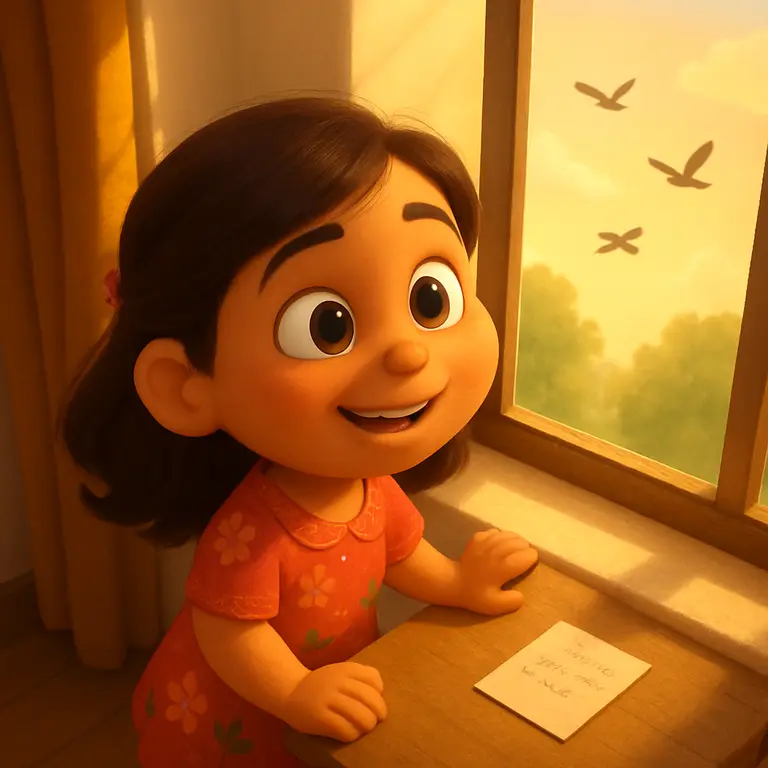
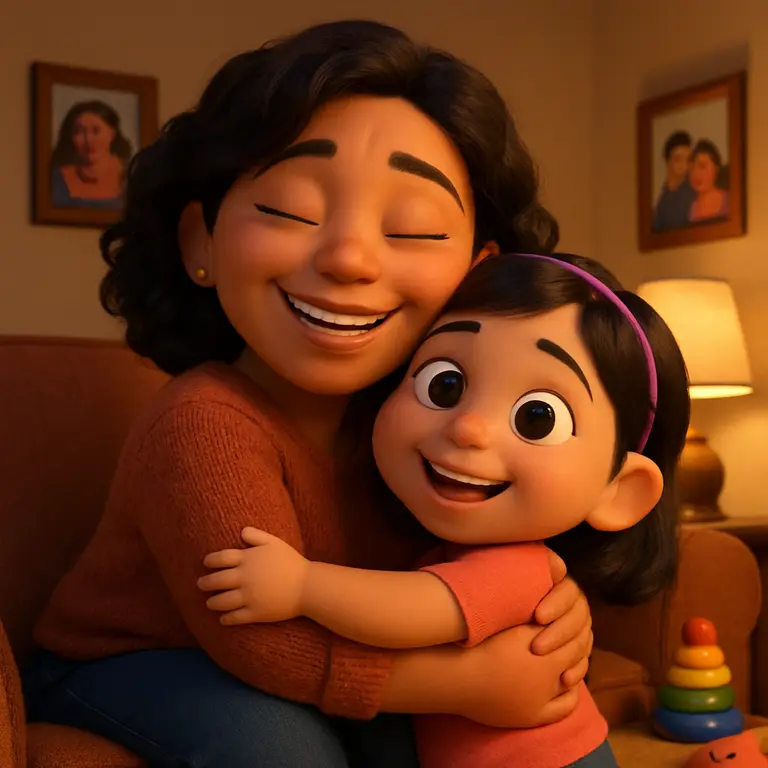
Why is it so hard for your child to say goodbye?
Separation anxiety is a normal part of development. KidsHealth (Nemours) explains that it shows up once babies understand that people still exist when they are out of sight, but before they understand time: they know you have gone, but not when you will come back. It usually develops between 8 months and 1 year, and in some children later, between 18 months and 2½ years.
The American Academy of Pediatrics (AAP), on HealthyChildren.org, describes how it changes with age:
- Around 9 months, most babies show it more clearly.
- At 15 to 18 months, many toddlers who skipped it as babies start having a hard time at goodbyes, with loud, tearful protests that are hard to stop.
- By age 3, most children understand the effect their distress has on the adults around them. That does not mean they are not upset, but it does mean your reaction matters a lot.
That is why the first day of daycare, preschool or kindergarten is such a tender moment: a new place, new people and a goodbye to the person they feel safest with, all at once. Tears at the classroom door do not mean you are doing something wrong. They mean your child loves you and is still learning that you come back.
How to read this story with your child
- Read it before the big day, at home and at a calm moment, a few days before drop-offs begin. The story previews what is going to happen.
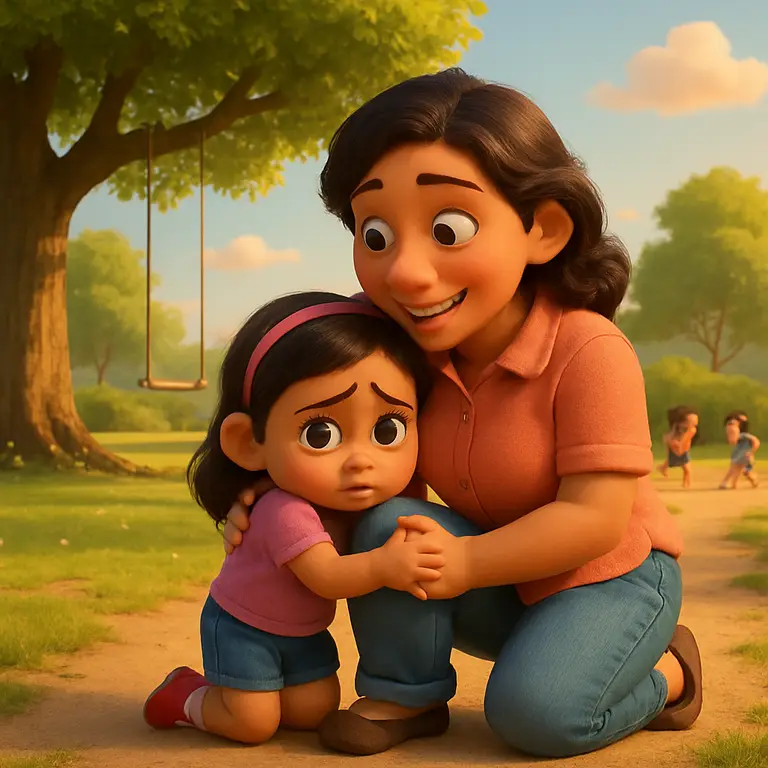
- Name Lily's feeling. When her mom leaves for work, Lily feels "a big knot in her tummy." Ask your child: "Have you ever felt a knot like that? Where?"
- Notice what Mom says: "I'll be back soon, sweetie, and I'll always be with you in your heart." Short, warm and true. You can borrow it word for word.
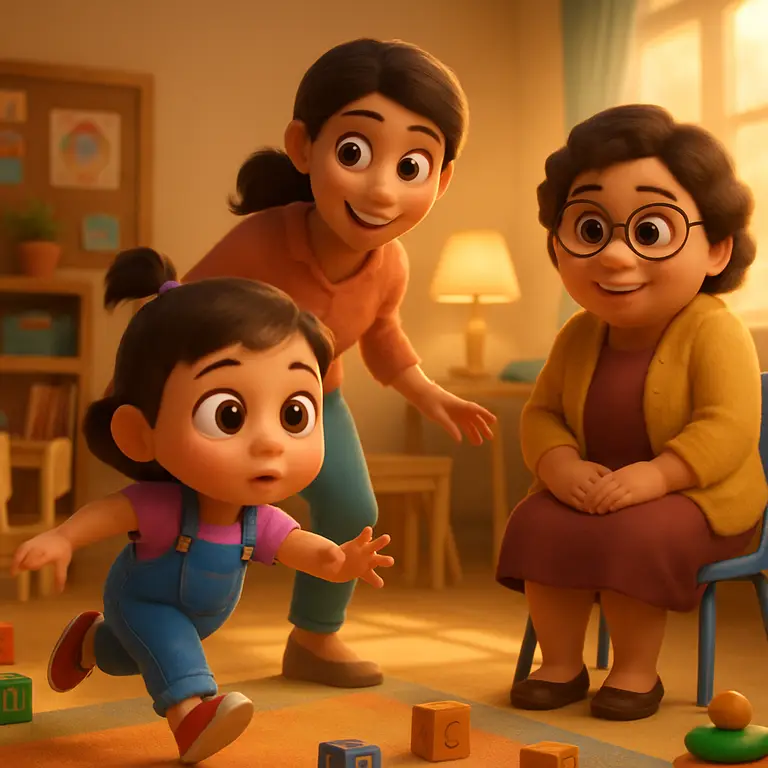
- Point out Mrs. Garcia. The teacher tells Lily she used to feel scared too, and teaches her a goodbye ritual: a secret handshake and a hug. Invent your own handshake together after reading.
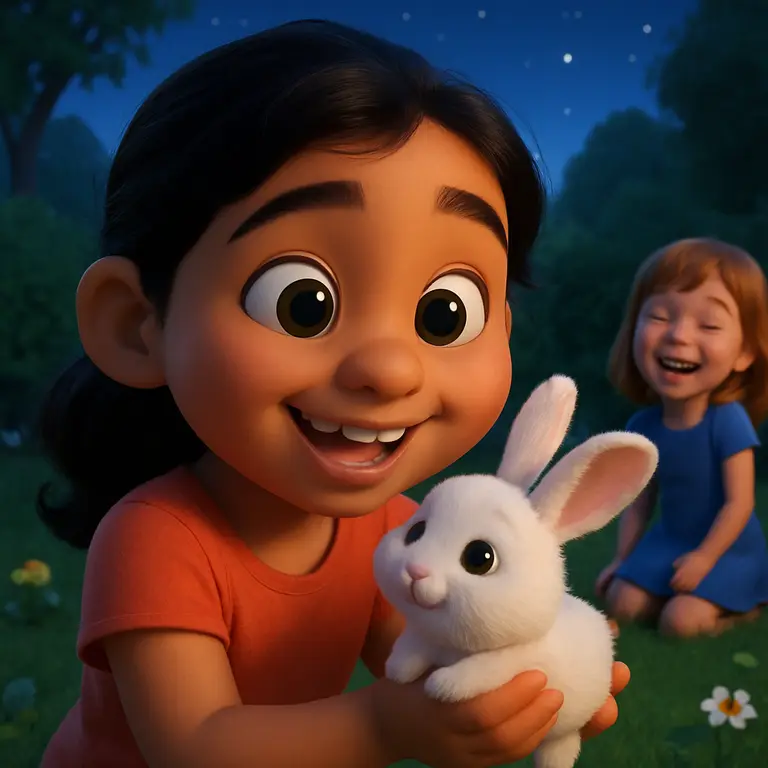
- Look at what Lily does while Mom is away: she plays with her friend Emma and Fluffy the rabbit, remembers her teacher's kind words and tells herself, "I'm brave, and I can do it!" Ask: "What could you do while I'm at work?"
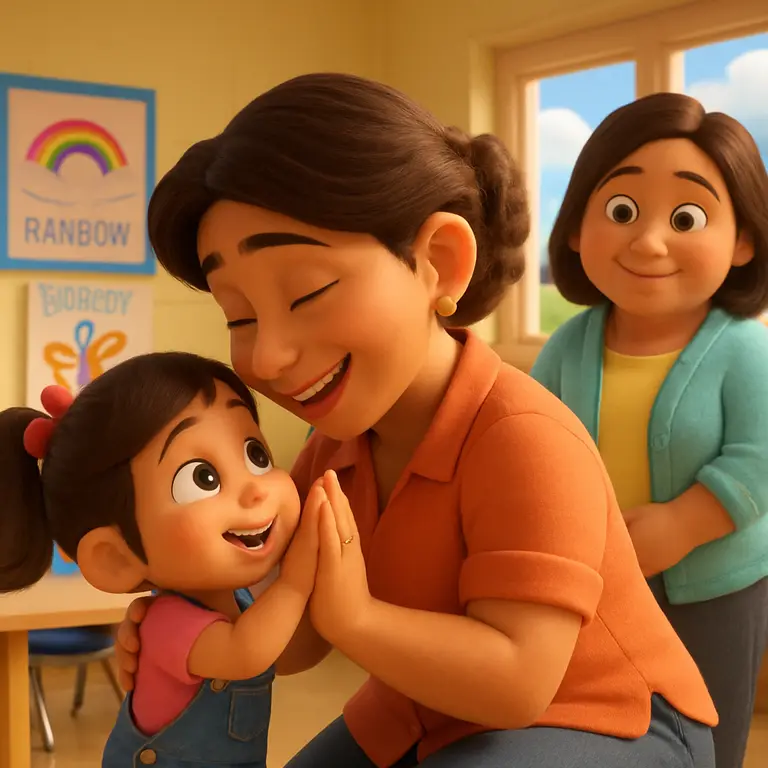
- Celebrate the reunion. Lily runs to give Mom a big hug. That ending is the heart of the story: Mom always comes back.
- Read it again and again. Knowing how a story ends is reassuring; repetition is part of how it works.
What to say and what to avoid
| Try saying | Try to avoid |
|---|---|
| "I'll pick you up after lunch, like always." | Sneaking out when they aren't looking. |
| "I'm going to miss you, and I'll be back for you." | "Stop crying, you're a big kid now." |
| "If you need something, tell your teacher." | Dragging out the goodbye or going back in. |
| "I love what you made today. Will you show me?" | Showing your own nerves in front of them. |
| "You did it, just like Lily." | Promising to come back "in a minute" when it isn't true. |
Practical ideas for easier goodbyes
- A short goodbye ritual, the same every time. The AAP recommends keeping goodbyes short and routine, whether that means a special hand signal, triple kisses or a favorite blanket. If you linger, the transition takes longer, and so does the anxiety.
- Tell them when you will be back in terms they understand. KidsHealth suggests using moments of the day, like "after lunch," because hours do not mean much yet at this age.
- Keep your promise. Coming back when you said you would is what builds trust. If you are running late, let the school know.
- Practice short separations before the start date: an afternoon with grandparents, an hour with a relative. KidsHealth also recommends visiting a new daycare or preschool together a few times before a full-time schedule begins.
- A transition object: a favorite stuffed animal, a family photo in their backpack or a scarf that smells like you.
- Watch the timing. KidsHealth notes that goodbyes are harder when children are tired, hungry or restless, so a calm breakfast and enough sleep help.
- Expect some tears. Crying or a tantrum at the door is common. If big meltdowns are part of your mornings, our story for tantrums has ideas for those moments.
When a personalized story helps even more
Watching another child say goodbye helps. Seeing themselves do it, at their own school and with their own family, helps even more. In NeuroStories you can create this same story, under "A challenge" and the fears topic, with your child as the hero, as a cartoon, alongside the person who drops them off each morning. You can describe your real situation: who picks them up, what your goodbye ritual looks like, or which toy comes along. The story then previews exactly what they are about to live.
It is the idea behind social stories: preview the situation and show how to handle it. NeuroStories is a family support tool, not therapy: if the anxiety is intense or not easing with time, talk to your pediatrician.