
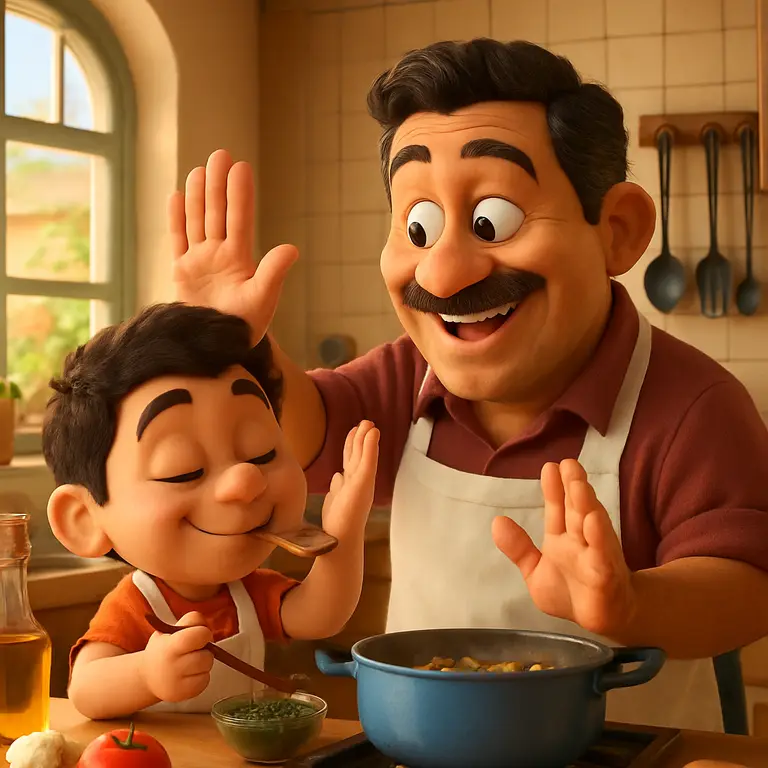
Why is it so hard for your child to try new foods?
Being wary of unfamiliar food is part of normal development. The American Academy of Pediatrics (AAP) notes that picky eating is very common, especially between ages 2 and 4, and usually short-lived. To a young child, a new color, smell or texture is something they do not yet know is safe.
Some children are also more sensitive to textures, smells or mixed foods, which can make an unfamiliar plate feel even more intense.
Control plays a part too. Eating is one of the few areas where a toddler truly gets to decide, and saying "no" to a plate is a way of using that power. The more we push, the firmer that "no" tends to get.
The good news is that familiarity matters a lot. The AAP says it can take 15 to 20 tries for a child to like a new food, and Seattle Children's notes toddlers may need a food offered 10 to 15 times before they eat it. A "no" today is not a "no" forever.
How to read this story with your child
- Read it away from the table, at a calm moment, so the story is linked to curiosity rather than to mealtime pressure.
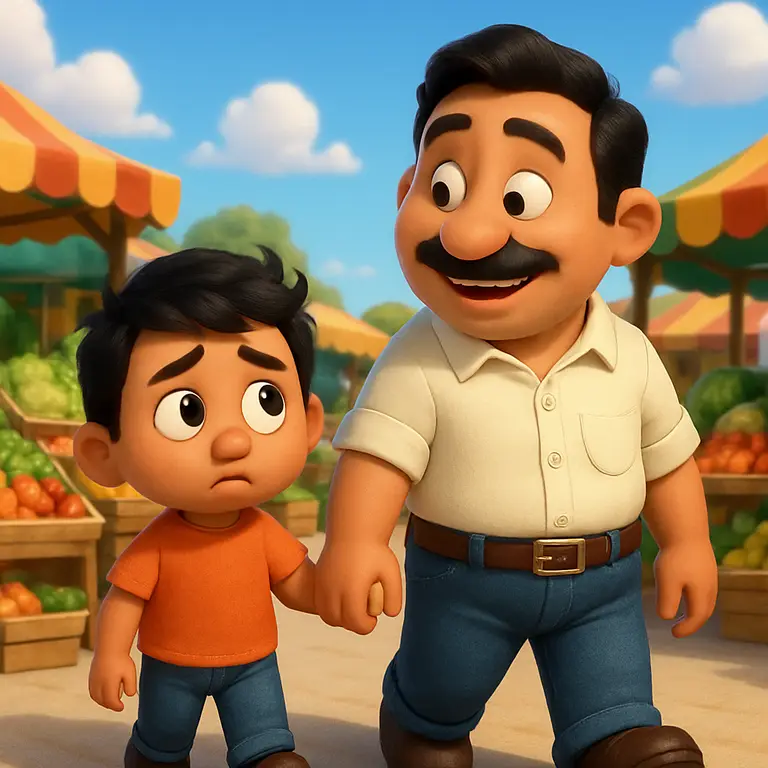
- Notice how Benny feels. He only likes pizza and macaroni and is "not sure" about the market. Ask: "How do you feel when you see a food you don't know?"
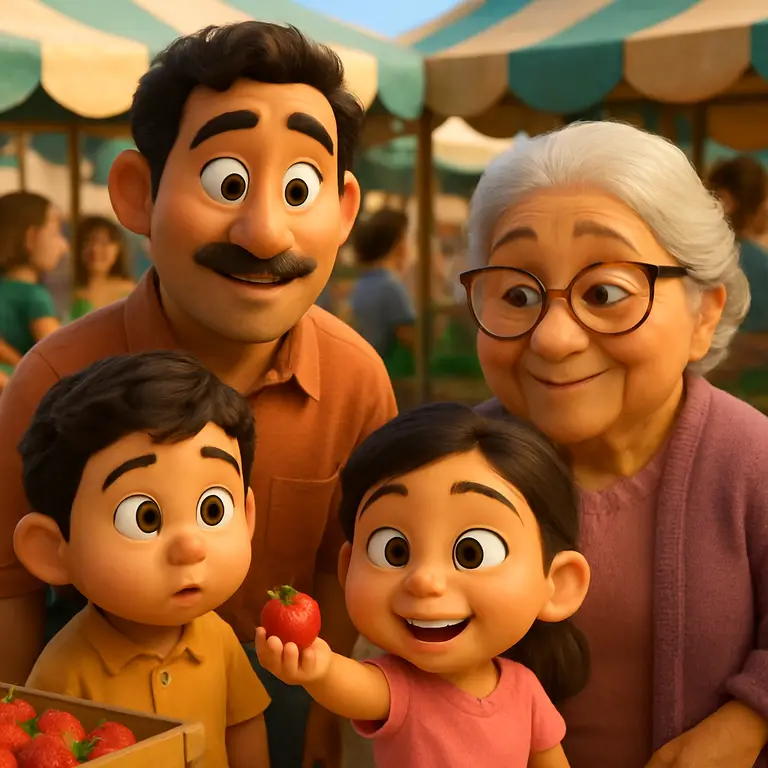
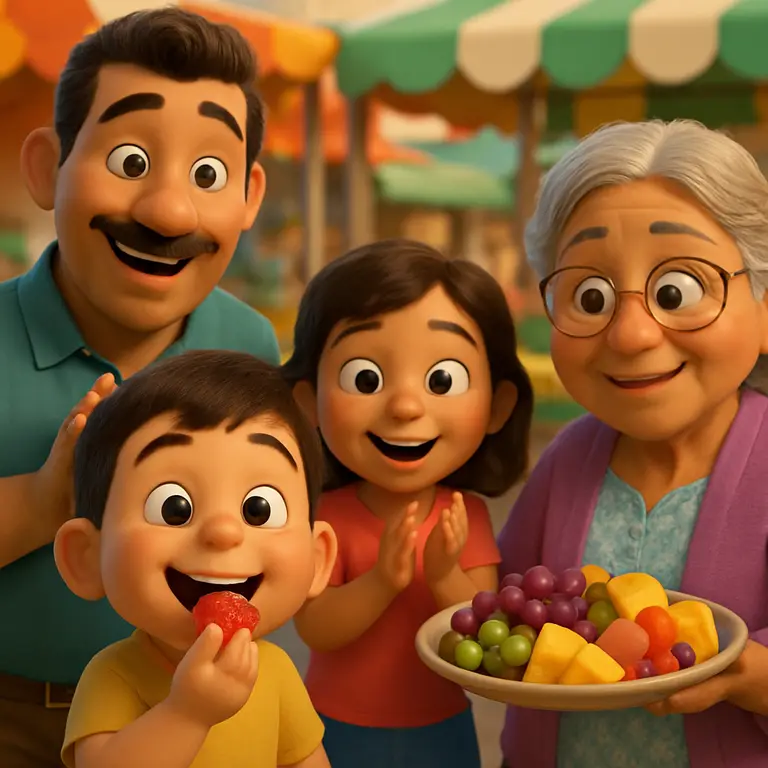
- Point out what helps Benny: his dad invites him on an outing instead of insisting, his friend Emma shows him how good the strawberry is, and nobody forces him. He takes one small bite, and that is enough to count as brave.
- Celebrate the step, not the plate. Carlos tells Benny he is "becoming a brave eater" for trying, not for finishing everything. Use the same words at home.
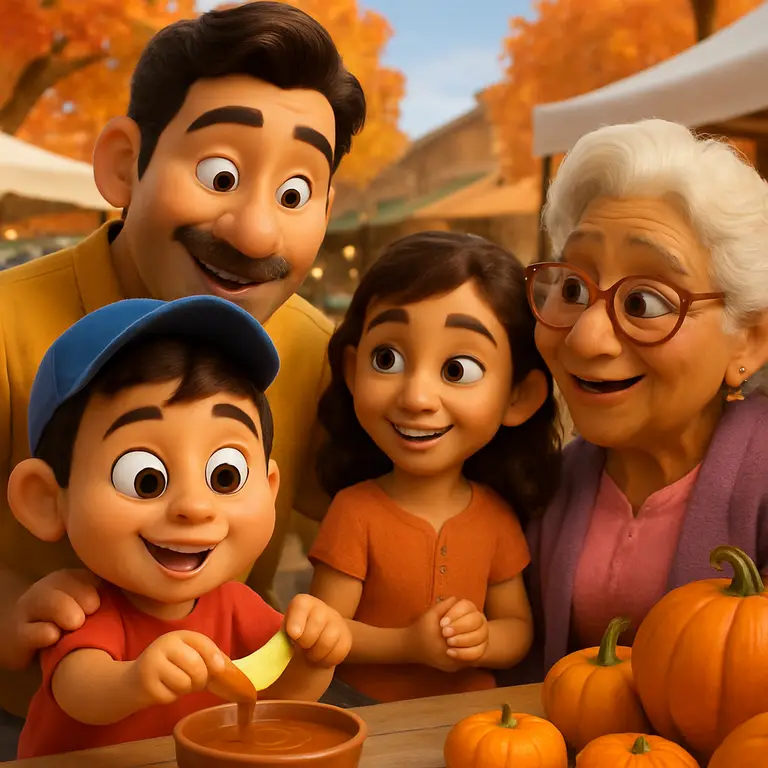
- Make it real: visit a market or the produce aisle and let your child pick one fruit to try this week, just like Benny. A familiar dip, like his caramel, can make the first taste easier.
What to say and what to avoid
| Try saying | Try to avoid |
|---|---|
| "You can touch it, smell it or take a tiny taste. You decide." | "You're not leaving the table until it's gone." |
| "What do you think it tastes like? Sweet or crunchy?" | "No dessert unless you eat your vegetables." |
| "You tried something new today. That was brave, like Benny!" | Labeling them in front of others: "She's such a picky eater." |
| "It's OK if you don't like it. We can try again another day." | Sneaking the food in without telling them. |
Small changes that help
- Eat together and model it. The AAP points out that children copy the eating habits of parents, siblings and friends. When they see you enjoy a vegetable, they are more likely to try it.
- One "safe" food on every plate. Your child always has something to eat, so the new food does not feel like a trap.
- Get them involved. Shopping, washing fruit or helping cook, like Benny exploring recipes with his dad, brings food closer before it reaches the plate. KidsHealth also suggests presenting foods in fun ways, such as cookie-cutter shapes.
- Tiny portions, no rush. A pea-sized piece is a fair goal. If it is refused, remove it without comment and offer it again another day.
- Predictable routines. Regular meal and snack times at the table, without screens, help as much as any trick. For another everyday routine told as a story, see our tooth brushing story.
If mealtimes often end in tears or tantrums, lower the pressure rather than raising it: a refused food today is just one of the many tries it takes.
When a personalized story helps even more
Many children find it easier to try something once they have seen themselves do it. In NeuroStories you can create this story with your child as the hero, the person who cooks at home and the exact food you are working on (tomatoes, fish or broccoli), all as cartoons. Seeing their own face taking that first calm bite helps them preview the moment before it happens at the table. It is the idea behind social stories: prepare for the situation and show how to handle it, step by step.