
All stories

Social skills · · 6 min read

A Story About Losing a Game: Teaching Your Child to Be a Good Sport

A story about losing helps because it shows your child, through a character like them, that feeling upset when you lose is normal and that you can calm down and still enjoy playing. Reading it at a calm moment, naming the feeling and practicing short family games where everyone sometimes wins and sometimes loses make it work better.

The story: «Losing Isn't the End»

A real story from the NeuroStories library. Read it with your child as it is, or create it in the app with their name, your family as cartoons and the exact situation you are going through.

  1. Losing Isn't the End — page 1

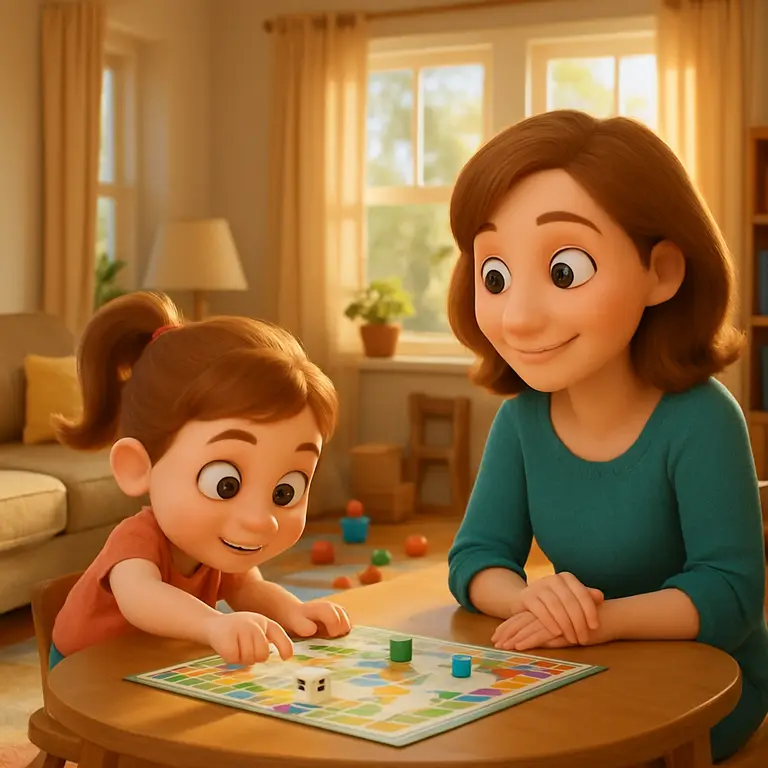
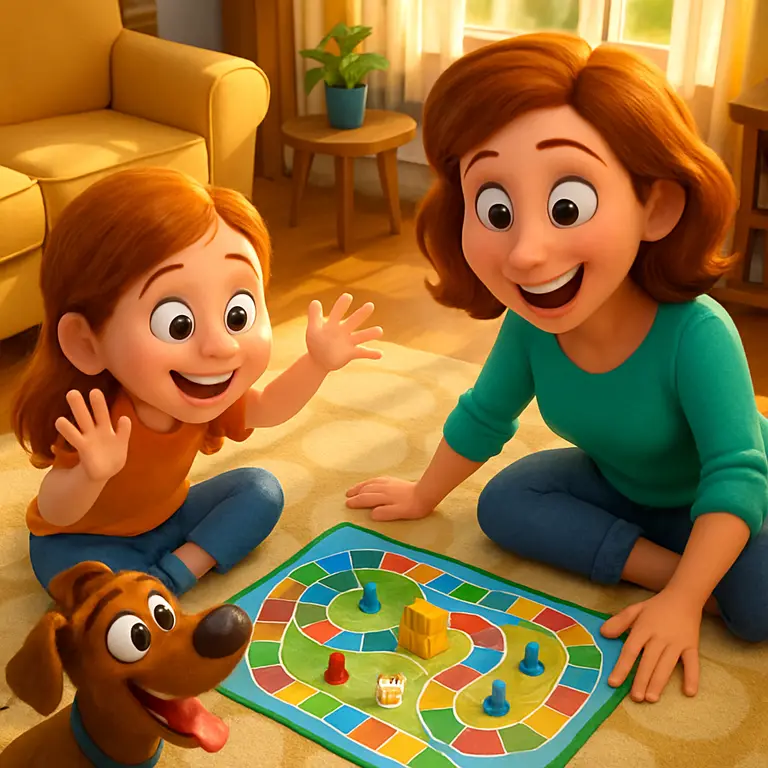
    Meet Emma, a bright and cheerful 6-year-old who loves playing board games with her mom. Today, they're playing Emma's favorite game, 'Treasure Hunt'. Emma is very excited and determined to win. 'I'm going to win this time, Mom!' she says. Her mom smiles and replies, 'We'll see, sweetie, it's just for fun.'

  2. Losing Isn't the End — page 2

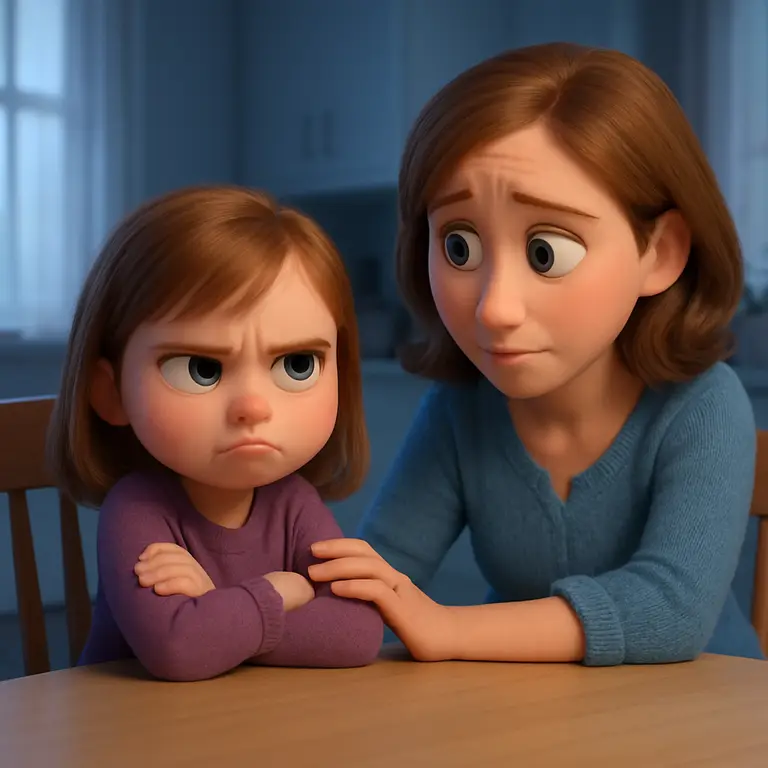
    As they play, Emma's mom is ahead, and Emma starts to get frustrated. She crosses her arms and pouts, 'It's not fair, I never win!' Her mom stops the game and asks, 'What's wrong, Emma? You were having so much fun.' Emma looks down, 'I just really wanted to win.'

  3. Losing Isn't the End — page 3

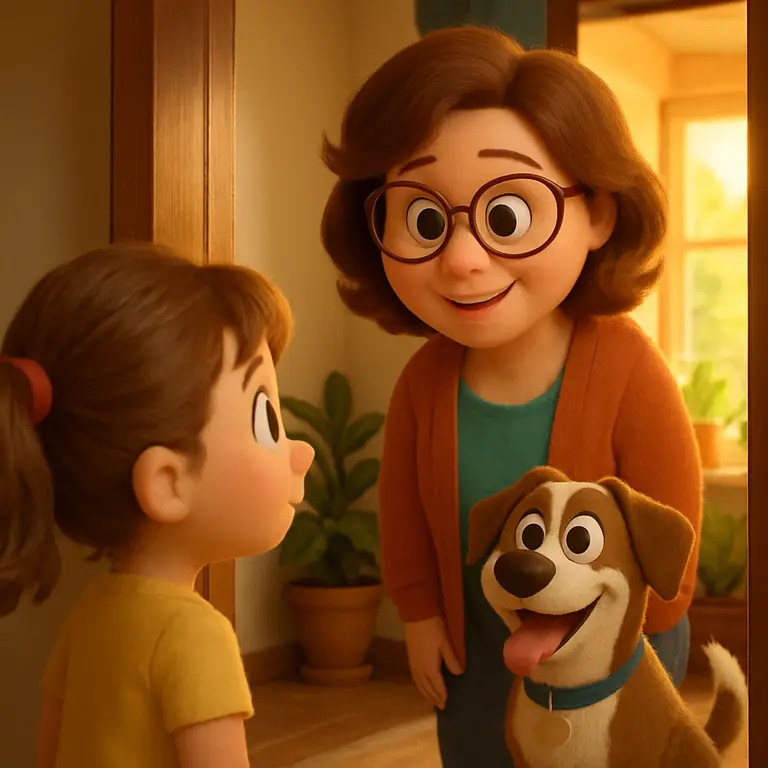
    Just then, their neighbor, Mrs. Thompson, knocks on the door with her friendly dog, Max. 'Hi, Emma! I saw you playing a game and thought I'd come over to say hello. What's going on?' Emma's mom explains the situation, and Mrs. Thompson smiles, 'I used to get frustrated when I lost games too, but then I learned it's all about having fun and playing together.'

  4. Losing Isn't the End — page 4

    Mrs. Thompson suggests they play a new game together, one that's more about teamwork. Emma's face lights up, 'Really? That sounds like fun!' Her mom agrees, and they all head to the living room to set up the new game. Emma is excited again, 'This is going to be the best day ever!'

  5. Losing Isn't the End — page 5

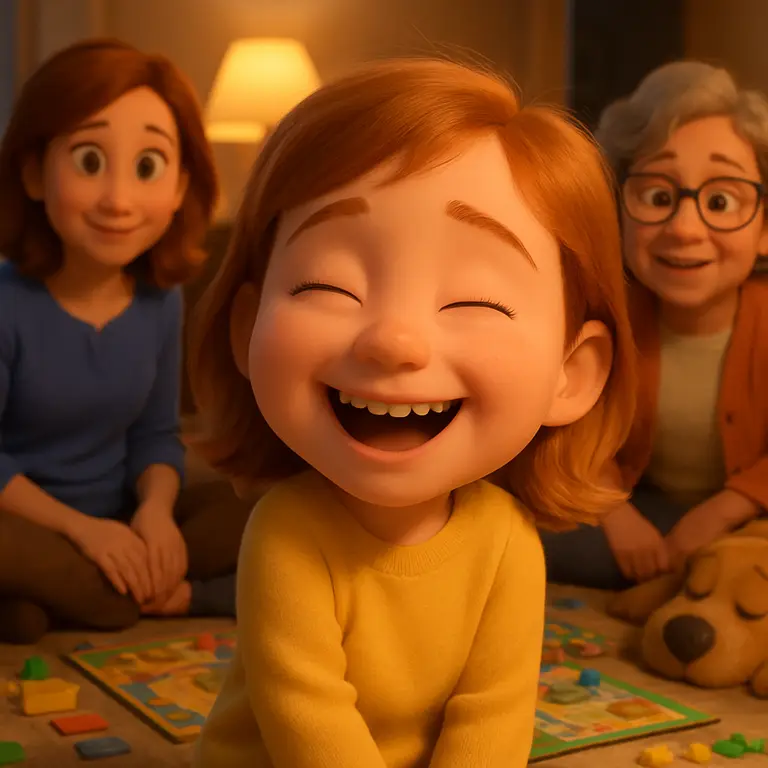
    As they play the new game, Emma realizes that winning isn't everything. She's having a great time with her mom and Mrs. Thompson, and even Max is joining in on the fun. 'This is the best game ever, Mom! I'm so glad we're playing together.' Her mom hugs her, 'I'm glad too, sweetie. Winning isn't everything, it's about spending time with the people we love.'

  6. Losing Isn't the End — page 6

    Emma learned a valuable lesson that day. She understood that it's okay to lose sometimes and that the most important thing is to have fun and be with the people she loves. From then on, Emma approached games with a new attitude, focusing on the joy of playing together rather than just winning. 'Thanks, Mom, and thanks, Mrs. Thompson, for teaching me that it's okay to lose and that fun is what matters most.'

Why is losing so hard for your child?

Losing is frustrating at any age, but for a young child it can feel huge. They are still learning to wait, to accept that things do not always go their way and to separate "I lost" from "I'm not good enough." When a game really matters to them, the feeling arrives long before any reasoning does.

Big reactions are part of development. The American Academy of Pediatrics (AAP) notes that tantrums are a normal part of development, happen most between ages 1 and 3, and tend to get better after 3, although they don't go away entirely. Losing a game is one of those moments that can still overwhelm a 4-, 5- or 6-year-old.

The good news is that being a good sport can be learned, and it is learned through practice. KidsHealth points out that kids might not know how to show they're good sports, so it's up to parents and coaches to set the example.

How to read this story with your child

  1. Read it at a calm moment, away from game time. Right after a meltdown it can sound like a scolding.
  2. Notice Emma's body. When Mom pulls ahead, Emma crosses her arms, pouts and says, "It's not fair, I never win!" Ask: "What do you think she's feeling? Do you ever cross your arms when you're upset?" Spotting the signs is the first step to stopping them.
  3. Point out what Mom does: she pauses the game and asks what is wrong instead of scolding. Emma can then say what is really going on: "I just really wanted to win."
  4. Talk about Mrs. Thompson. She shares that she used to get frustrated when she lost too. Ask: "Who do you know who gets upset when they lose?" Hearing that grown-ups felt the same makes the feeling less shameful. Share a time it happened to you.
  5. Discuss the ending. Emma and her mom switch to a teamwork game, and Emma realizes that playing together matters more than winning. Then add the next step for your child: "Next time we play Treasure Hunt, what could you do if you start losing?" That way the lesson carries back to competitive games too.

What to say and what to avoid

Try sayingTry to avoid
"You're frustrated because you wanted to win. That's OK.""It's just a game, get over it."
"Let's take a big breath and finish the game together."Letting them win every single time.
"What was your best move today?"Gloating or celebrating loudly in front of the loser.
"You kept playing even when you were behind. That's hard!""Fine, then we're never playing again."

Small changes that help

  • Model losing out loud. "Oh no, I lost. That's a bit annoying, but it was a really fun game." The Mount Sinai Parenting Center recommends looking at our own reactions to winning and losing.
  • Praise effort, not results. Notice when your child waits their turn, keeps playing while behind or congratulates the winner.
  • Practice losing at home. Short, simple games where everyone wins sometimes and loses sometimes. Losing somewhere safe is the best training.
  • Ask about what went well. KidsHealth suggests not focusing on who won, but asking, "What did you do well?" or "Was there something you wish you could have done better?"
  • A bounce-back phrase. A short line to repeat, like "Sometimes you win, sometimes you learn," helps your child recover faster. Mount Sinai calls these "bounce back" statements.
  • Mix in cooperative games, like the one Emma plays with Mrs. Thompson, as a low-pressure way to practice turn-taking.

If losing often ends in a full meltdown, our story for tantrums may help too.

When a personalized story helps even more

Every child has their own hard game: checkers, a card game, a race at recess or a soccer match at school. In NeuroStories you can create a story with your child as the hero, playing that exact game with their family or friends, all as cartoons. Seeing themselves lose, take a breath and enjoy the game again helps them rehearse the moment before it happens. It is the idea behind social stories: preview the situation and show how to handle it.

Frequently asked questions

Is it normal for my child to get so upset when they lose?
Yes. Handling frustration is a skill children build over years and with practice. Many young kids experience losing as unfair or personal and react with tears or anger. The goal is not for them to stop feeling it, but to learn, little by little, what to do with that feeling.
Should I let my child win to avoid a meltdown?
Now and then, with very young children, it can help them enjoy the game, but not every time. The Mount Sinai Parenting Center suggests letting children practice losing at home, even with simple board games, so they get a balance of success and failure. Losing somewhere safe is the best training.
What should I do if my child flips the board or quits?
Pause the game calmly, without a lecture. Name the feeling ('You're really frustrated because you wanted to win'), help them breathe and offer a small choice: keep playing or take a break. Later, once they are calm, talk about what to try next time and play again.
Do cooperative games help?
Yes, as a stepping stone. In cooperative games everyone wins or loses together, so kids can practice turn-taking and patience with less pressure. Keep playing short competitive games too, though: the only way to learn to lose well is to actually lose sometimes.
When should I talk to a professional?
If reactions are very intense or frequent, if your child avoids games or activities for fear of losing, if it is affecting friendships at school or if you notice signs of anxiety, talk to your pediatrician. The Mount Sinai Parenting Center also recommends seeking help in those cases.

Sources and further reading

Stories are a supportive family tool and do not replace professional advice. If something worries you, talk to your pediatrician or a specialist.