Why are haircuts so hard for some kids?
For adults, a haircut is a chore. For many children, it is a string of new sensations they cannot control. The children's occupational therapy service at Cwm Taf Morgannwg (NHS Wales) explains that some children find haircuts uncomfortable or upsetting because of:
- Touch: brushes, scissors, clippers or hair falling on their skin.
- Pulling on the scalp.
- Past experiences of pain or discomfort.
- The salon itself: noise, bright lights and strong smells.
NHS Borders adds that the scalp can be a very sensitive area, and that for some children having their hair brushed, cut or even touched is extremely unpleasant and can feel painful. That is not a child being difficult. It is a real sensation they need help managing.
Then there is the uncertainty. Your child sits in a chair that goes up, down and around, a cape is fastened at their neck, a stranger stands behind them where they can't see, and nobody has told them how long it will last. Most of the fear fades when the experience becomes predictable and your child feels they have some control.
How to read this story with your child
- Read it a few days ahead, at a calm moment, not on the way out the door. The story should feel linked to calm, not to rushing.
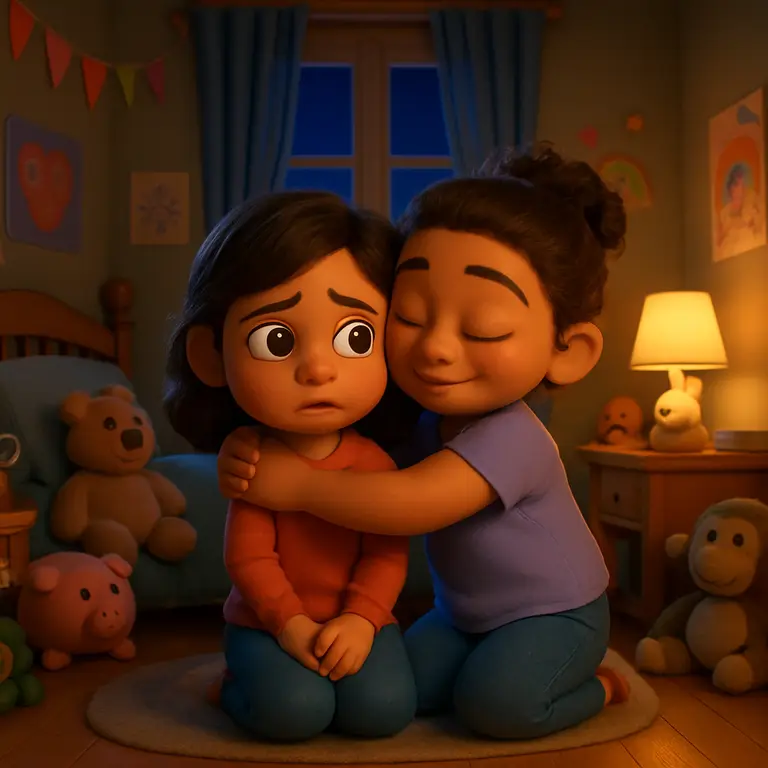
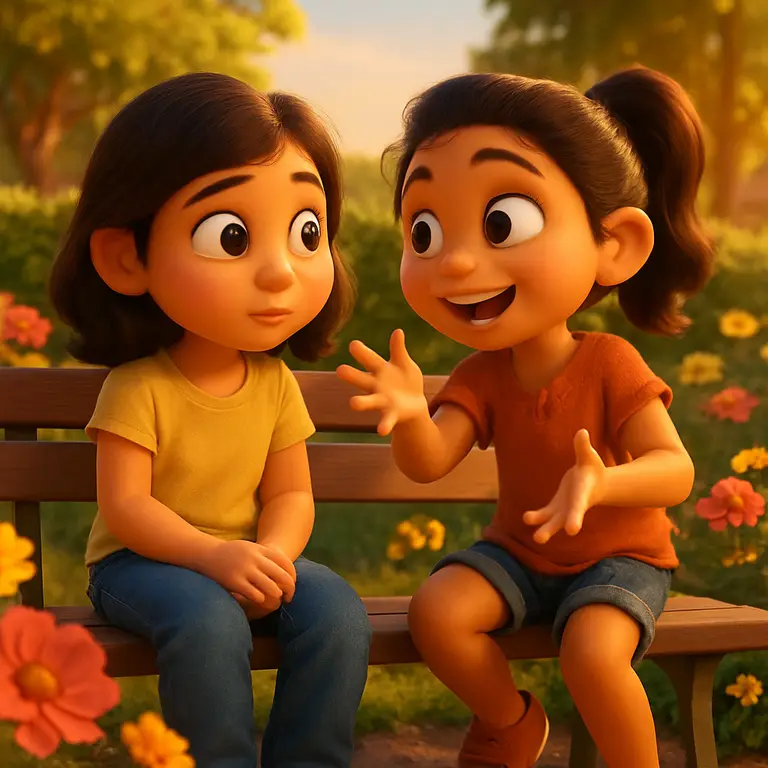
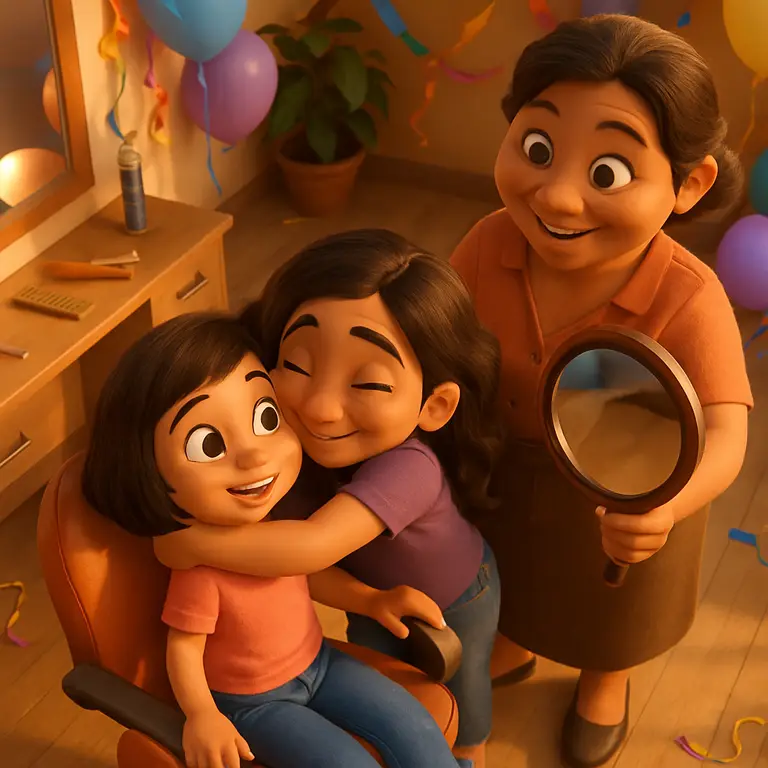
- Notice Olivia. Emma's best friend says she was scared at first too, and that her hair grew back. Ask: "Do you know anyone else who felt nervous about a haircut?" Knowing they are not the only one helps.
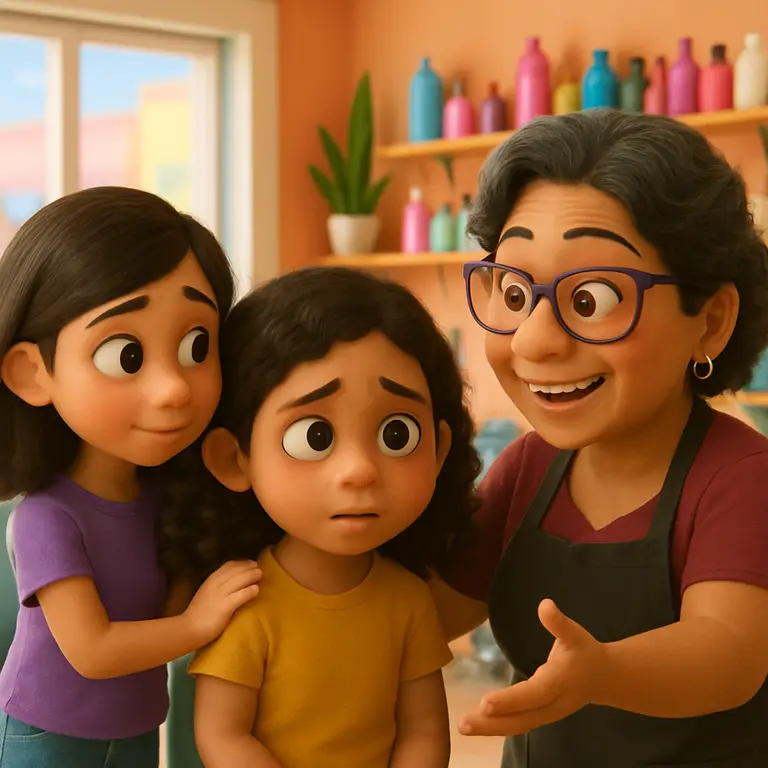
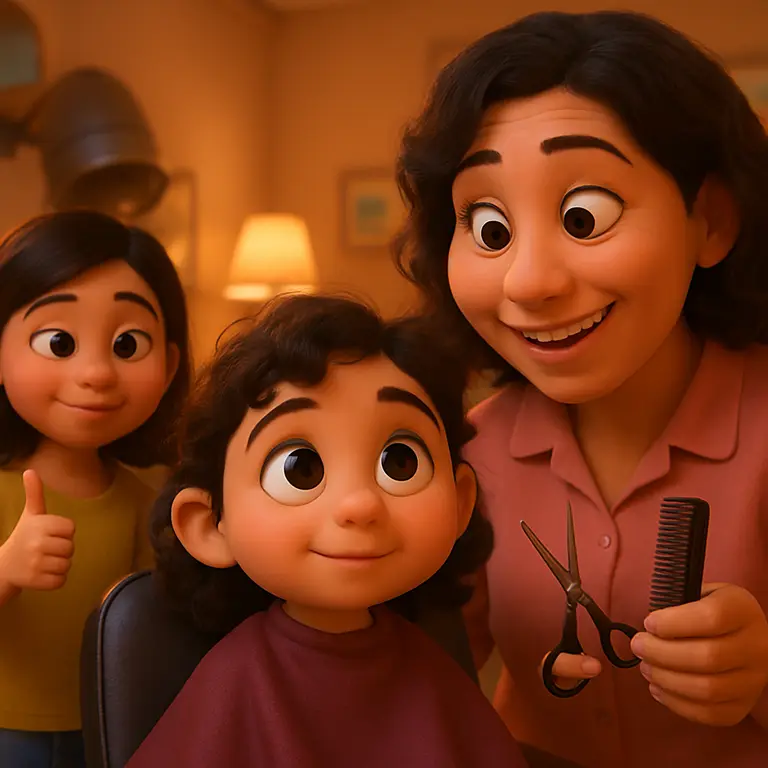
- Point out what Ms. Rodriguez does: she explains what she will do and shows Emma all her tools before she starts. You can ask your own stylist or barber to do the same.
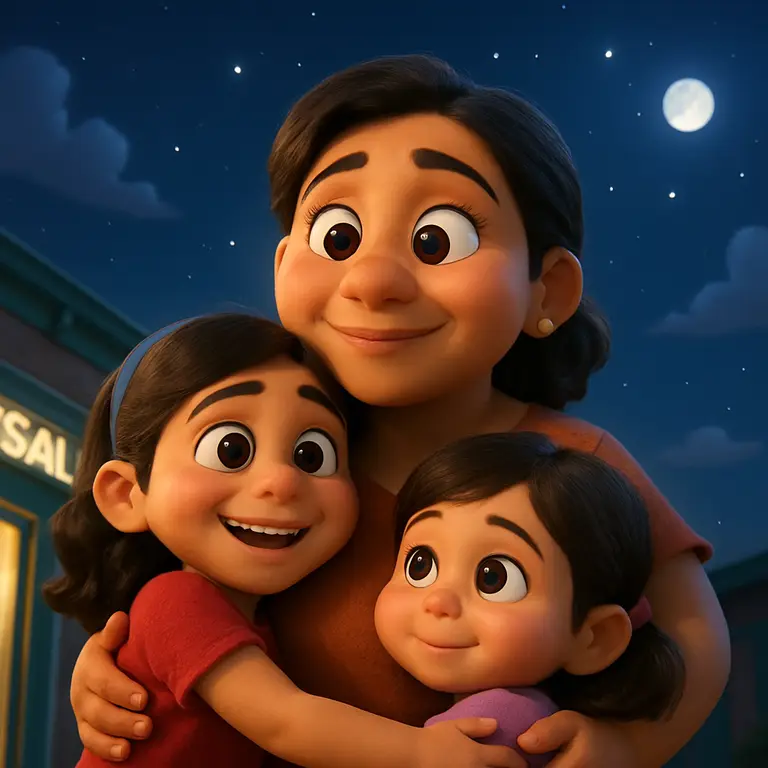
- Talk about who comes along. Emma goes with her mom and Olivia. Ask your child who they would like to bring, or which toy.
- Pause on the mirror page. Emma looks at her new hair and feels proud. Ask: "How do you think you'll feel when it's done?"
- Repeat it. Reading the same story several times is part of how it works: your child learns the steps and stops dreading the unknown.
What to say and what to avoid
| Try saying | Try to avoid |
|---|---|
| "First the cape, then the water, then the scissors. I'll tell you before each step." | Taking them by surprise, without warning. |
| "The clippers buzz and tickle, but they don't hurt." | "Stop being so dramatic, it doesn't hurt." |
| "If you need a break, raise your hand and we'll stop for a moment." | Holding them down to get it over with. |
| "Today we're just going to watch Dad get his hair cut." | Threats like "no park if you don't sit still." |
| "You did it! How do you feel?" | Comparing them with siblings or cousins. |
Practical ideas for before, during and after
Before
- Visit the salon without a haircut. Say hello, look at the chairs and listen to the sounds. Children's Specialized Hospital suggests visiting new places first when they are not crowded.
- Play hair salon with a doll or stuffed animal: cape, comb, toy scissors. Then let your child "cut" your hair.
- Introduce the clippers switched off: let your child hold and look at them, then hear them running, away from their head, when they are ready.
- Wash their hair at home if salon hair washing is a struggle, so time in the chair is shorter.
During
- Book a quiet time and tell the stylist what your child finds hard.
- Offer small choices: scissors or clippers, your lap or the chair, which song to play. NHS Wales recommends going slowly, offering choices and using distractions your child enjoys.
- A comfort object on their lap. Children's Specialized Hospital suggests a weighted toy on the lap during sensory challenges such as haircuts.
- Headphones or earplugs if the clippers or dryer are too loud.
After
- A change of clothes if loose hair feels itchy.
- Something fun afterward, even if the haircut wasn't perfect.
NHS Borders also reminds parents not to expect big changes overnight: sensory strategies can take several months of consistent use to show results. If noise is the biggest trigger, our story for kids afraid of loud noises may help too.
When a personalized story helps even more
Every child has their own salon, their own barber and their own way of experiencing it. In NeuroStories you can create this same story, under "A challenge" and the sensory topic, with your child as the hero and the person who goes with them, all as cartoons. You can describe your real situation: the clippers scare them, they prefer scissors, or their brother goes first. Seeing themselves in the chair and walking out happy makes the story feel much closer.
It is the idea behind social stories: preview the situation step by step and show how to handle it. NeuroStories is a family support tool, not therapy: if haircut distress is intense or not getting better, talk to your pediatrician.