All stories

Routines · · 6 min read

Tooth Brushing Story for Kids: Making Brushing Easier, Even for Sensitive Mouths

A tooth brushing story for kids helps because it shows your child, through a character like them, that brushing can feel comfortable and even fun with a soft toothbrush, a flavor they like and clear steps. It turns a nightly battle into a routine. Reading it before bath time and repeating the same steps every night make it work better.

The story: «Brushing Away Fears»

A real story from the NeuroStories library. Read it with your child as it is, or create it in the app with their name, your family as cartoons and the exact situation you are going through.

  1. Brushing Away Fears — page 1

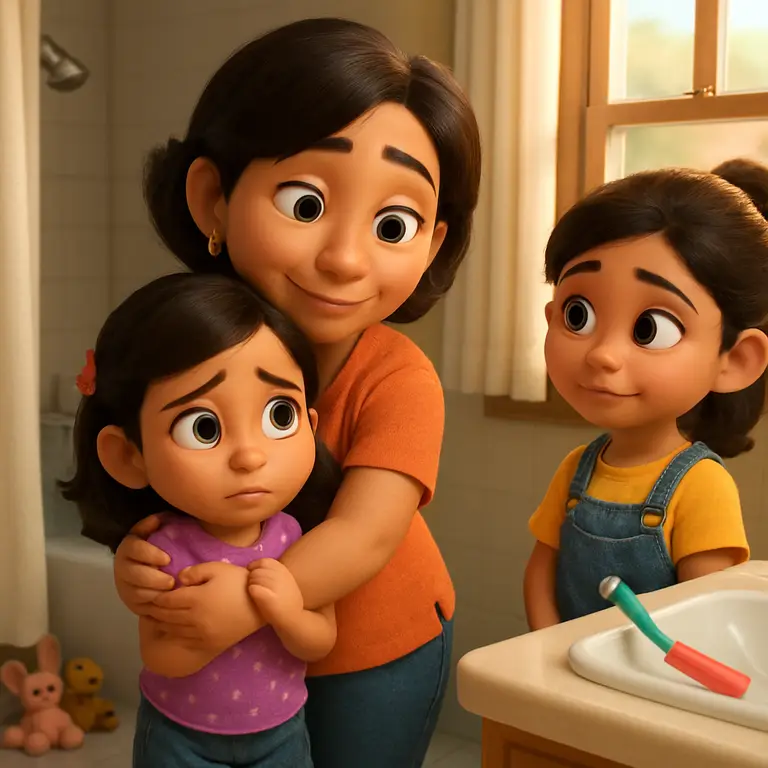
    Meet Emma, a bright and curious 6-year-old who loves playing with her best friend, Olivia. Emma has a big smile, but lately, she's been feeling anxious about brushing her teeth. 'I don't like the feeling of the toothbrush in my mouth,' Emma tells her mom. Her mom, Mrs. Garcia, gives her a gentle hug and says, 'Let's find a way to make it better, sweetie.'

  2. Brushing Away Fears — page 2

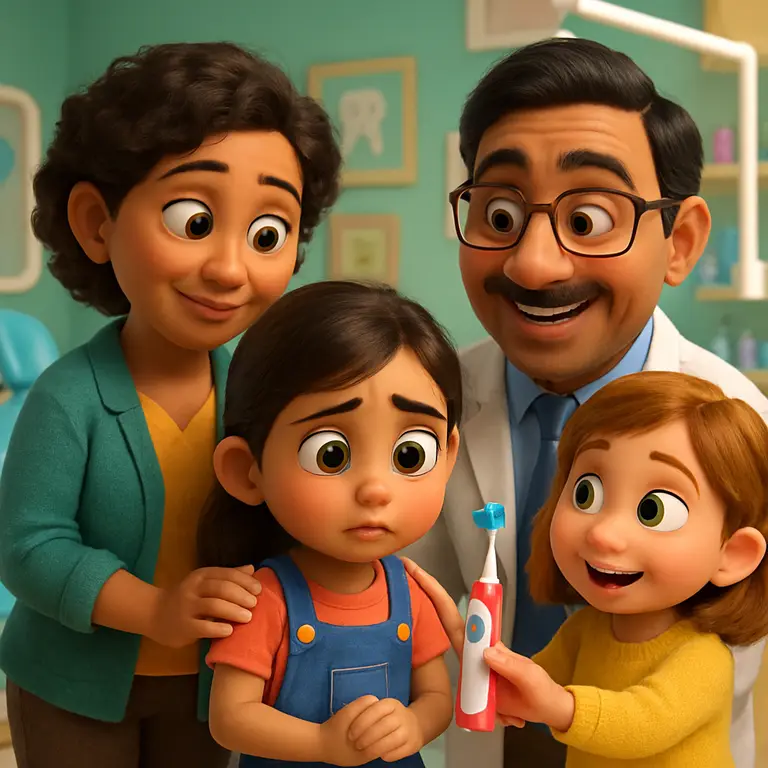
    Mrs. Garcia suggests they visit their kind dentist, Dr. Patel, who has a gentle approach and a big smile. 'Dr. Patel will help us find a way to make brushing your teeth more comfortable,' she says. Emma feels a bit better knowing she'll have help. 'Okay, mom, I'll try,' she says, looking up at her mom with hopeful eyes. Olivia chimes in, 'I brush my teeth every morning and night, it's fun! We can do it together!'

  3. Brushing Away Fears — page 3

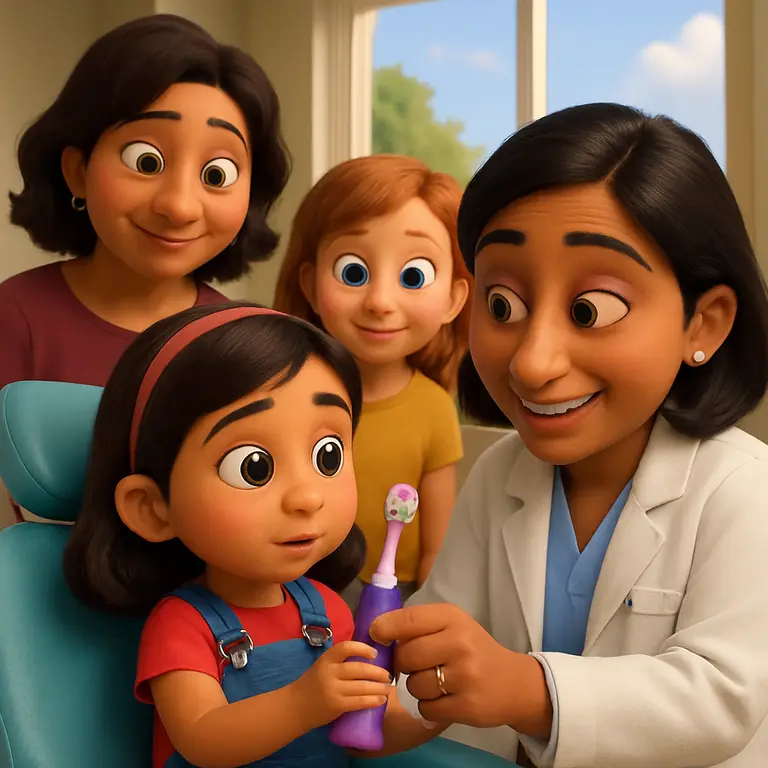
    Dr. Patel shows Emma a special toothbrush with soft bristles and a small head, which might be gentler on her teeth and gums. 'Let's try this one, okay?' Dr. Patel asks, handing Emma the toothbrush. Emma takes it, feeling the soft bristles, and says, 'This doesn't feel so bad.' Her mom and Olivia smile, happy to see Emma feeling more comfortable.

  4. Brushing Away Fears — page 4

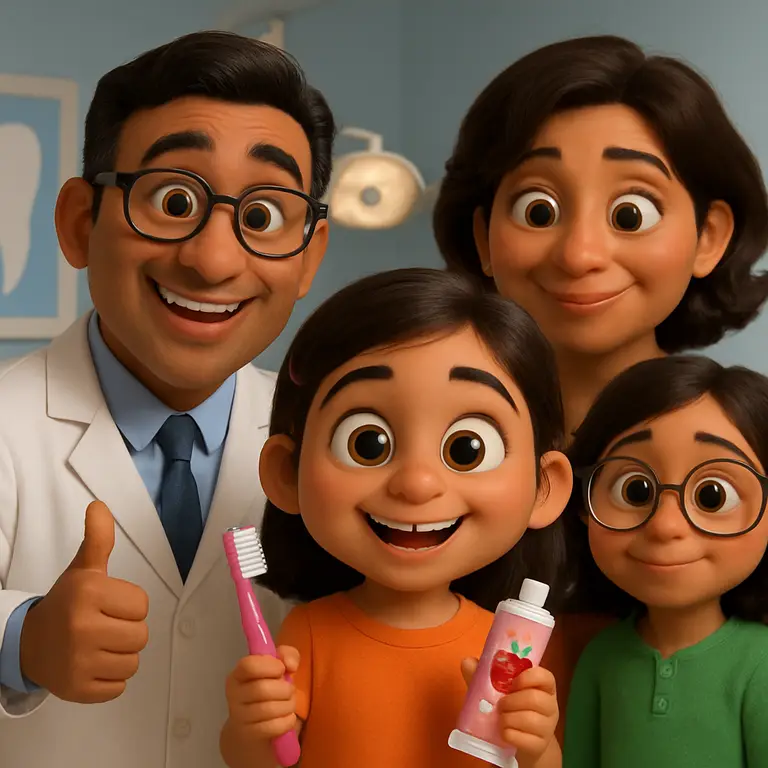
    Dr. Patel also recommends a flavored toothpaste that might make brushing more enjoyable for Emma. 'Let's try the strawberry flavor,' she suggests. Emma's face lights up, 'I love strawberries!' With the new toothbrush and toothpaste, Emma starts to feel more excited about brushing her teeth.

  5. Brushing Away Fears — page 5

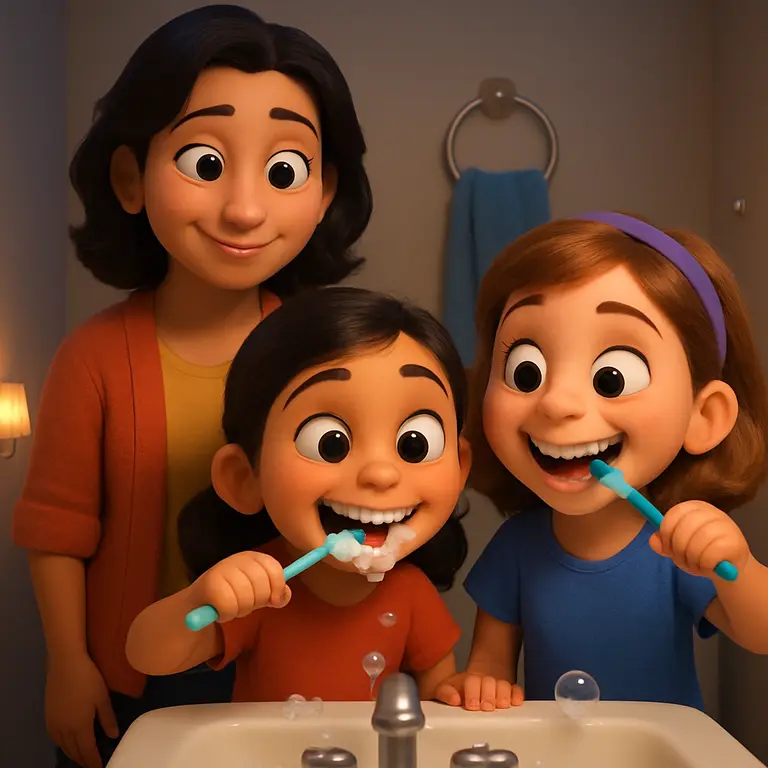
    That night, Emma brushes her teeth with her new toothbrush and strawberry toothpaste. 'This is actually fun!' she exclaims, looking at her mom with a big smile. Her mom smiles back, 'I'm so proud of you, Emma. You're doing a great job.' Olivia, who is sleeping over, joins in, 'Can I brush my teeth too?' and they brush their teeth together, laughing and making it a fun experience.

  6. Brushing Away Fears — page 6

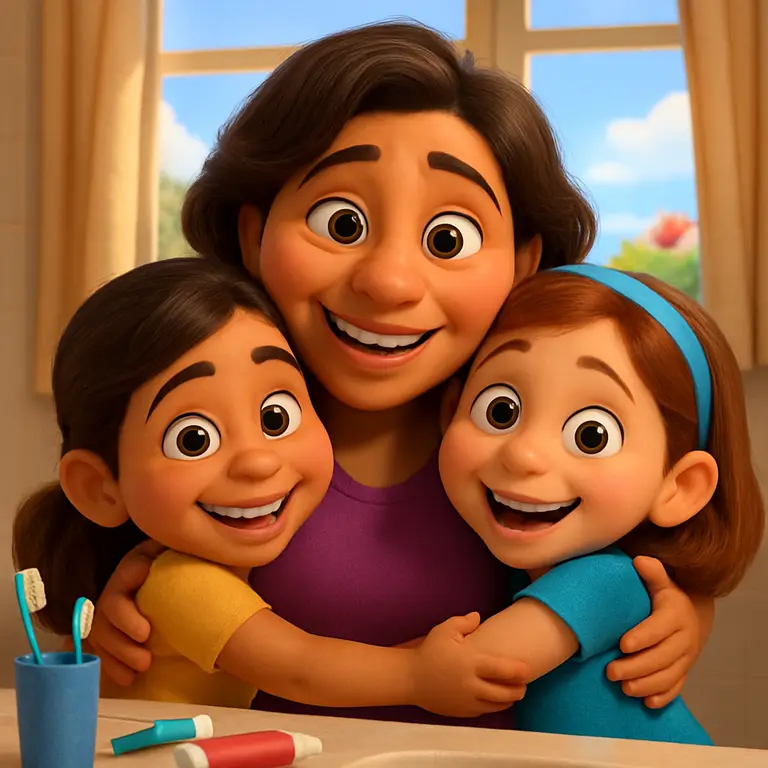
    From that day on, Emma feels more confident about brushing her teeth. She realizes that with the right tools and support, she can overcome her fears. 'I'm so happy I can brush my teeth without feeling scared,' Emma says, giving her mom and Olivia a big hug. 'We're proud of you too, Emma,' her mom replies, hugging her back. 'You're brave and strong, and you can do anything you set your mind to.'

Why does your child fight tooth brushing?

Brushing teeth looks simple, but for many kids it is one of the hardest moments of the day. The reasons vary from child to child:

  • How it feels in the mouth. Bristles, a strong toothpaste flavor or foam can be really unpleasant, especially for children with a more sensitive mouth. It is not an act: for them, it genuinely bothers.
  • Lack of control. Having someone else put an object in your mouth, sometimes in a hurry, is uncomfortable for anyone.
  • Timing. At night they are tired; in the morning everyone is rushing.
  • Wanting to do it themselves. Many kids want to be in charge, and brushing turns into a power struggle.

The good news is that what helps most is not insisting harder, but making brushing more comfortable and more predictable. It is worth the effort: the American Academy of Pediatrics (AAP), on HealthyChildren.org, recommends brushing twice a day from the very first tooth, usually after breakfast and before bed.

How to read this story with your child

  1. Read it outside the bathroom, at a calm moment, not right when it is time to brush. That way the story is linked to calm, not to the nightly standoff.
  2. Listen to what Emma says. She tells her mom, "I don't like the feeling of the toothbrush in my mouth." Ask your child: "What bothers you? The brush, the toothpaste, the taste?" Their answer gives you clues.
  3. Notice how Mom responds. Mrs. Garcia doesn't scold. She gives Emma a hug and says, "Let's find a way to make it better." That is a phrase worth borrowing.
  4. Point out what Dr. Patel does: she offers a toothbrush with soft bristles and a small head, lets Emma feel it first, then suggests a strawberry toothpaste. Emma gets to try before deciding. You can ask your own dentist for the same.
  5. Look at the sleepover page. Emma and her friend Olivia brush together, laughing. Ask: "Who would you like to brush with?"
  6. Celebrate the ending. Emma feels confident and proud. Read the story again over several nights: repetition is part of how it works.

What to say and what to avoid

Try sayingTry to avoid
"Which part bothers you? Let's find a way you like.""Don't be dramatic, it doesn't hurt."
"Top teeth, bottom teeth, then we finish with the song."Holding their head still by force.
"Do you want to start, and then I'll finish?"Brushing fast without warning.
"Pick your toothbrush: the blue one or the green one."Threats about the dentist or cavities.
"You did a great job tonight, just like Emma."Turning brushing into a punishment or a candy deal.

Practical ideas for brushing without battles

  • A soft, small toothbrush. The AAP recommends a toothbrush made for young children, with soft bristles and a small head. If your child is sensitive, try a few until one feels right.
  • The right amount of toothpaste. The AAP advises a rice-grain smear of fluoride toothpaste under age 3 and a pea-sized amount from 3 through 6. A CDC study found that nearly 40% of children aged 3 to 6 used more than recommended. Less toothpaste also means less foam and less strong flavor.
  • A flavor they like. Mild or fruity flavors can help if mint feels too spicy, just like Emma's strawberry toothpaste.
  • Make it fun. HealthyChildren.org suggests brushing along to a favorite song, taking turns (let them brush your teeth) or following a children's brushing app.
  • A clear finish line. The NHS recommends about 2 minutes. A timer or a two-minute song tells your child exactly when it ends.
  • Spit, don't rinse. The NHS advises spitting out after brushing without rinsing, so the fluoride keeps working. If your child cannot spit yet, the AAP suggests tilting their head down so the toothpaste dribbles out.
  • Same order every night. Brushing works best as part of a predictable routine: bath, pajamas, teeth, story, lights. See our guide to a calming bedtime routine for anxious kids.

When a personalized story helps even more

Every child has their own toothbrush, their own song and their own way of feeling brushing. In NeuroStories you can create this same story, under "A challenge" and the routines topic, with your child as the hero, as a cartoon, in their own bathroom and with the person who helps them each night. You can describe your real situation: the foam bothers them, they like brushing to music, or their sister brushes alongside them. Seeing themselves succeed makes the story feel much closer.

It is the idea behind social stories: preview the situation step by step and show how to handle it. NeuroStories is a family support tool, not therapy or dental advice: if there is pain, bleeding or very intense resistance, talk to your child's dentist or pediatrician.

Frequently asked questions

How much toothpaste should my child use?
The American Academy of Pediatrics recommends a smear of fluoride toothpaste about the size of a grain of rice for children under 3, and a pea-sized amount for ages 3 through 6. Put the toothpaste on the brush yourself so you control the amount.
Until what age should I help my child brush?
HealthyChildren.org notes that children usually need help brushing until about age 8. A handy sign: when they can tie their own shoelaces, they can usually brush on their own, though you should still check they brush for the full 2 minutes.
What if my child says brushing hurts or feels bad?
Take it seriously. Try a toothbrush with very soft bristles and a small head, a mild-flavored toothpaste and slow, gentle strokes. If discomfort continues, or you notice bleeding, pain or swollen gums, check with your child's dentist or pediatrician.
How long should kids brush their teeth?
The NHS recommends about 2 minutes, at least twice a day, with one of those times last thing before bed. Two minutes can feel endless to a young child, so a song, a timer or a brushing app helps them know when they are done.
When should I talk to a professional?
If the resistance is very intense, also shows up with certain food textures or other sensations in the mouth or on the skin, or makes brushing impossible, talk to your pediatrician or dentist. They can tell you whether further assessment makes sense.

Sources and further reading

Stories are a supportive family tool and do not replace professional advice. If something worries you, talk to your pediatrician or a specialist.