Why does your child hit?
A social story about not hitting starts from one idea: hitting is communication. When a toddler or preschooler hits, they are usually saying "I am angry, frustrated or overwhelmed" with the only tool that is fast enough. The American Academy of Pediatrics puts it plainly: young children have little natural self-control, and they need adults to teach them not to kick, hit or bite when they are angry, but to express their feelings through words.
The NHS adds some reassurance: most young children occasionally bite, hit or push another child, and it does not mean your child will grow up to be aggressive. Children often go through phases of being upset or insecure and show it through their bodies. Finding out what is worrying them is the first step to helping.
Your child is not a "bad kid" for hitting. They are a child with a big feeling and not yet enough skills. That is why this story does not show Samuel hitting or being told off. It shows him doing something else with his anger.
How to read this social story with your child
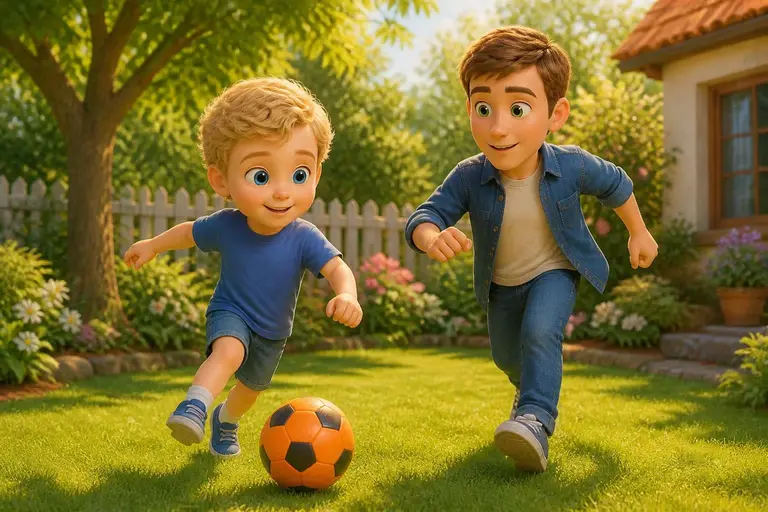
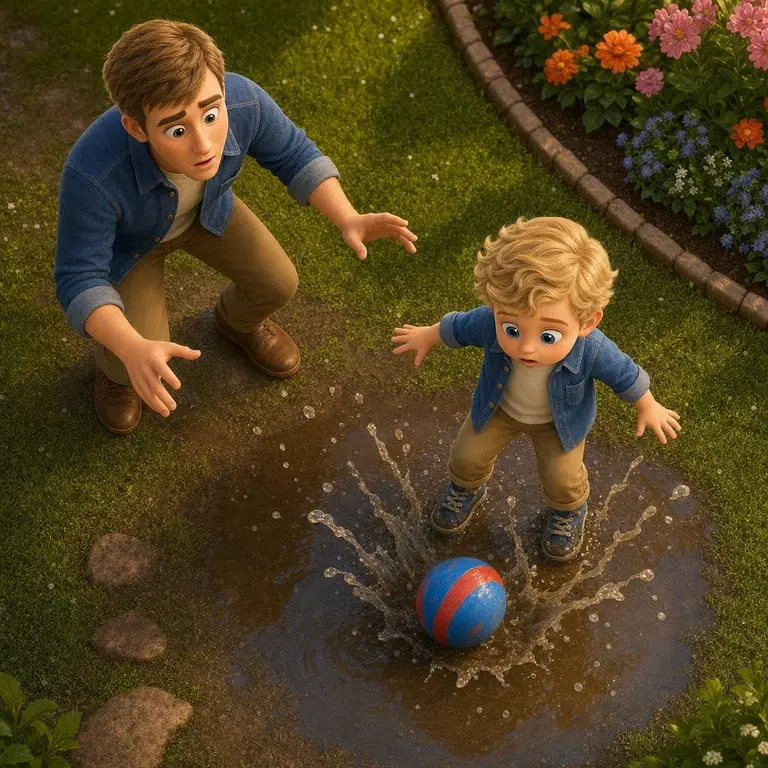
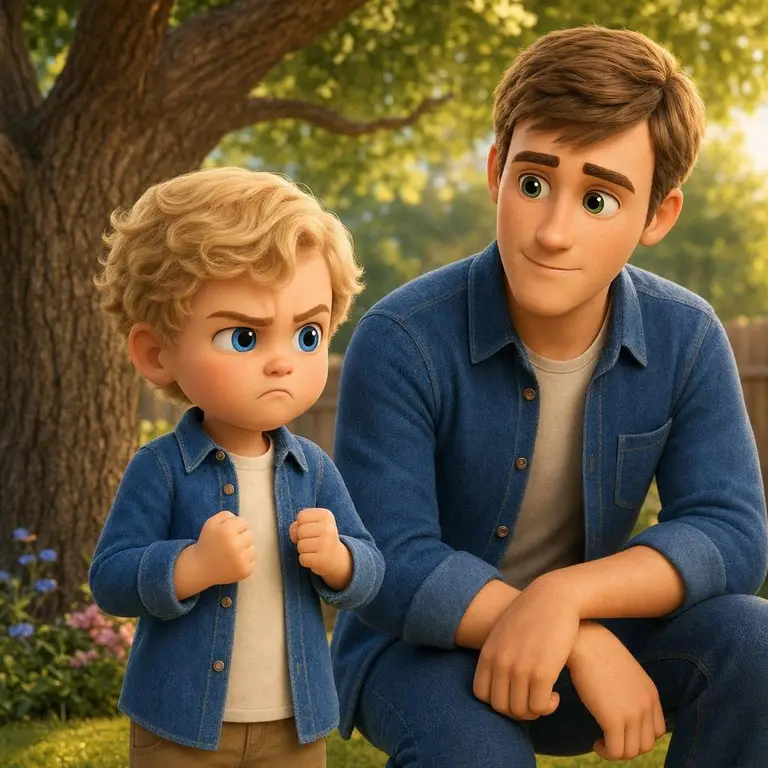
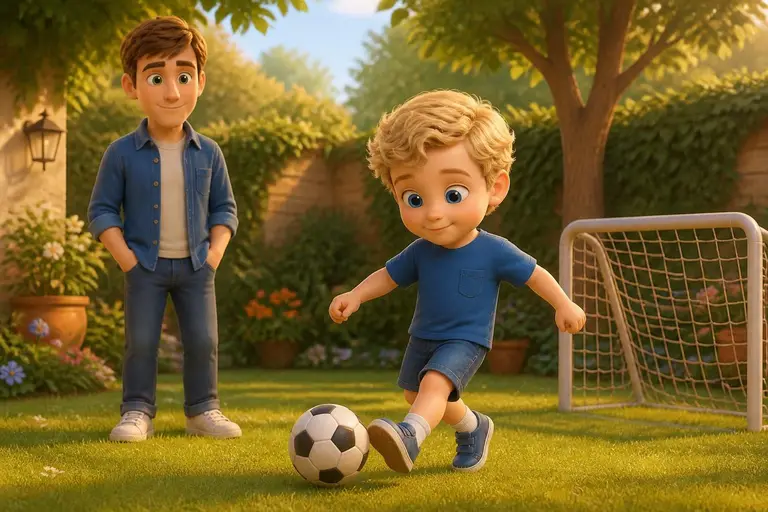
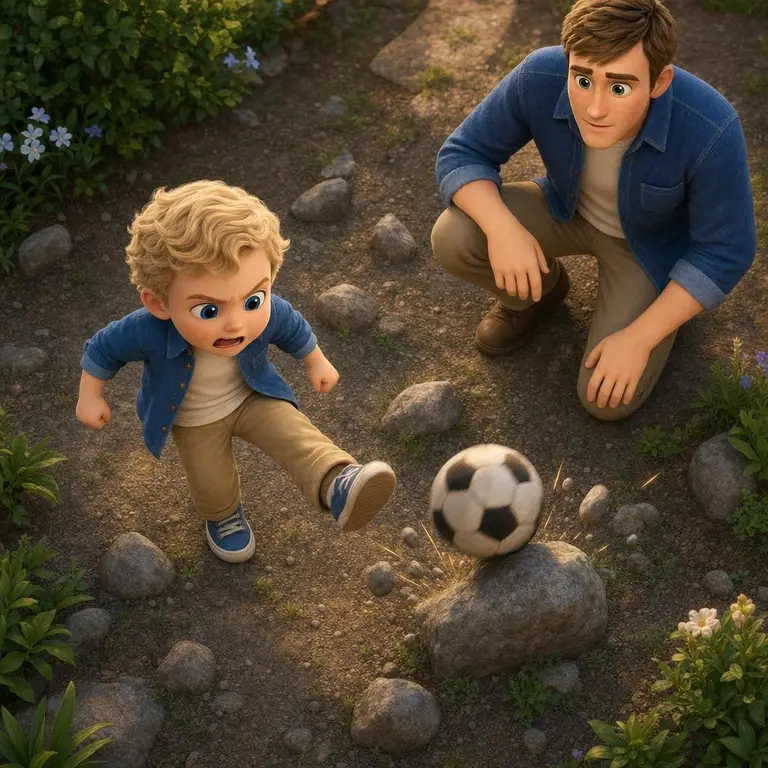
In the story, Samuel is playing football in the garden with his dad. The ball rolls into a puddle and splashes his shoes. His fists tighten, his cheeks feel hot and his breath comes quick.
- Read it at a calm moment, never right after your child has hit someone. A lesson in the middle of a meltdown does not stick.
- Pause on the body signals. Tight fists, hot cheeks, fast breathing. Ask, "What does your body do when you get angry?" Spotting the signals early is what gives your child time to choose.
- Read Samuel's words slowly. He says, "I feel angry," squeezes his hands together, steps back from the ball and asks, "I need a moment. Can you wait for me?" Say the line together until your child knows it by heart.
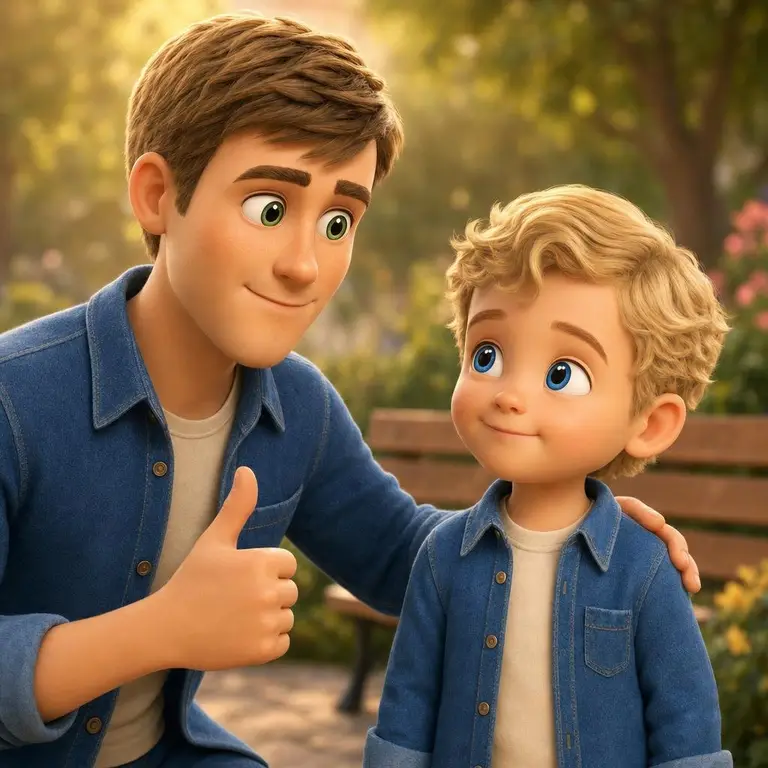
- Notice what Dad does. He nods and says, "I will wait for you." No lecture, no punishment. Samuel breathes slowly, feels the pressure ease, and comes back to kick the ball gently.
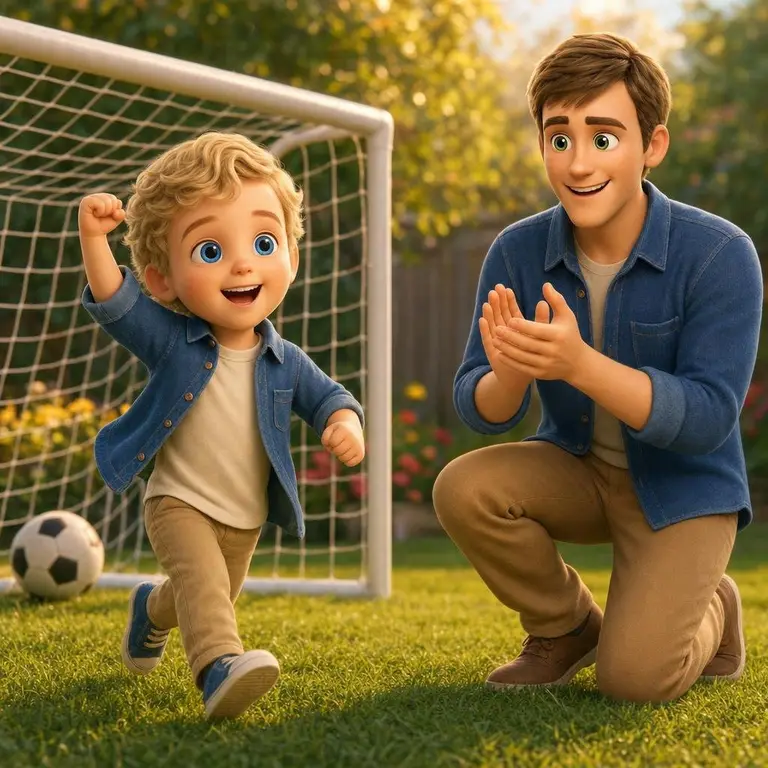
- Point out that it happens again. Later the ball hits a rock and Samuel gets angry a second time. He uses the same steps, and after a short pause he scores a goal. Dad says, "Great calm, great play!" The message: the plan works more than once.
- Read it again over several days, and practice squeezing hands and stepping back as a game, when nobody is upset.
Keeping hands to myself: a replacement, not just a "no"
"Don't hit" tells a child what to stop. It does not tell them what to do with the energy in their arms. The AAP notes that it is always more effective to reinforce the behavior you want and teach alternatives than to just say "stop that." A good replacement for hitting is:
- Physical, so it uses the same urge: squeezing hands, pressing palms together, hugging a cushion.
- Fast, so it fits in the second before the hit.
- Short to say: "I need a moment" or "Wait for me."
- The same every time, at home, at preschool and at grandma's.
Samuel's three steps, squeeze, step back and ask for a moment, meet all four. Choose the one that fits your child, and keep the words identical.
What to say and what to avoid
| Try saying | Try to avoid |
|---|---|
| "I won't let you hit. You're really angry." | "You're a bad boy" or "You're mean." |
| "Squeeze your hands. I'll wait for you." | Hitting back "so they see how it feels." |
| "You stepped back. That was hard, and you did it." | Noticing only the times it goes wrong. |
| "Let's check on your sister together." | Long explanations while they are still upset. |
| "Later, let's practice what Samuel does." | Forcing an apology mid-meltdown. |
Hitting when angry: a calm, consistent response
What you do after the hit matters as much as the story. Toddlers and preschoolers learn from patterns, so the goal is the same calm response every time:
- Act straight away. Stop the hitting, keep everyone safe and give your attention first to the child who was hurt.
- Keep your voice low and your words few. The NHS warns that losing your temper or shouting back will not end the outburst. The CDC suggests pausing for a few deep breaths before responding.
- Name the feeling, limit the behavior. The CDC suggests naming the emotion, accepting the feeling and limiting the behavior. With hitting, that can sound like: "It's okay to feel angry. It's not okay to hit."
- Stay close while they calm down. The CDC describes this as a time-in: you stay with your child to support them, instead of sending them away.
- Prompt the replacement afterwards: "Next time, squeeze your hands like Samuel and tell me 'I need a moment.'"
- Praise the try. When your child steps back instead of hitting, even clumsily, notice it out loud.
If hitting comes with screaming or throwing, our social story about anger covers the bigger outburst, and our guide to social stories for emotional regulation brings anger, tantrums and other big feelings together.
Using this story in the classroom or in therapy
Hitting often shows up where children share space and toys: the block corner, the line for the slide, a crowded circle time. Teachers can read the story to the group, practice "squeeze, step back, ask for a moment" as a whole-class routine, and use the exact same words when a child is about to hit. That way the prompt is familiar, not a correction aimed at one child.
For speech therapists and occupational therapists, the story gives a script and a body-based strategy that families can repeat at home. You can read more about how NeuroStories supports schools and therapists on our page for professionals.
When to talk to a professional
Most hitting fades as children learn words and self-control. Talk to your pediatrician if your child seems unusually aggressive for longer than a few weeks and you cannot cope with it on your own, if they hurt other children or attack adults, or if the hitting is getting more frequent rather than less. If your child is autistic or has other support needs, their therapist can help you find the triggers and a replacement that suits their body.
When does a personalized story help even more?
Samuel gets angry at a muddy ball. Your child might hit when a sibling takes a toy, when it is time to leave the park or when a tower falls. With NeuroStories you can create an "A challenge" story about that exact moment, with your child as the hero and their family as cartoons, using the same calm-down words you practice at home. Seeing themselves squeeze their hands and step back makes the plan feel like theirs. It is the idea behind social stories: preview what will happen and show, step by step, how to handle it.