All stories

Feelings and meltdowns · · 6 min read

A Social Story About Feelings: Helping Your Child Name Their Emotions

A social story about feelings helps your child recognize emotions because it shows, through a character like them, that every feeling has a name, that you can feel more than one at a time and that talking about them helps. It works best read at a calm moment, followed by simple questions about your child's own day.

The story: «Feeling My Emotions»

A real story from the NeuroStories library. Read it with your child as it is, or create it in the app with their name, your family as cartoons and the exact situation you are going through.

  1. Feeling My Emotions — page 1

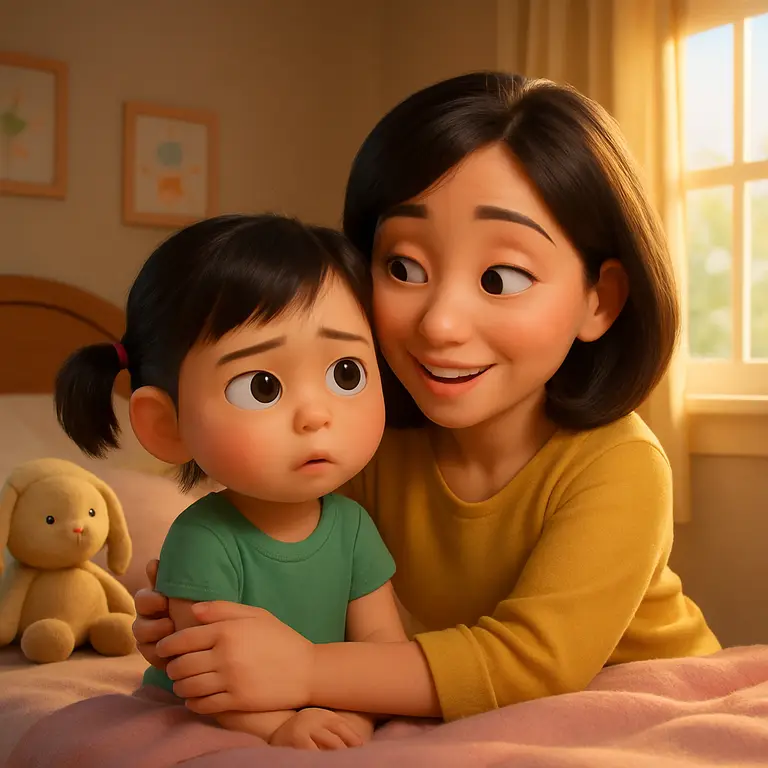
    Meet Emma, a 6-year-old girl who loves playing with her best friend, Olivia. Emma's mom is helping her get ready for school. But today, Emma is feeling a bit off. 'Mom, I don't know what's wrong with me,' Emma says. 'I just feel... funny.'

  2. Feeling My Emotions — page 2

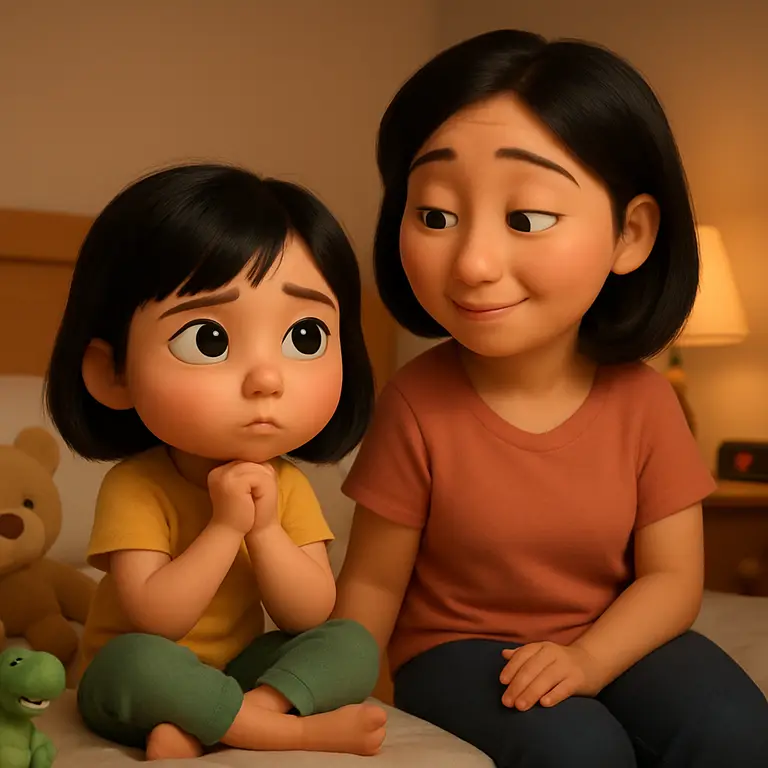
    Emma's mom asks her to explain what she means by 'funny'. Emma thinks for a moment, then says, 'I feel happy because I get to see Olivia today, but I also feel sad because I had a bad dream last night.' Her mom smiles and says, 'It's okay to feel more than one emotion at a time, sweetie.'

  3. Feeling My Emotions — page 3

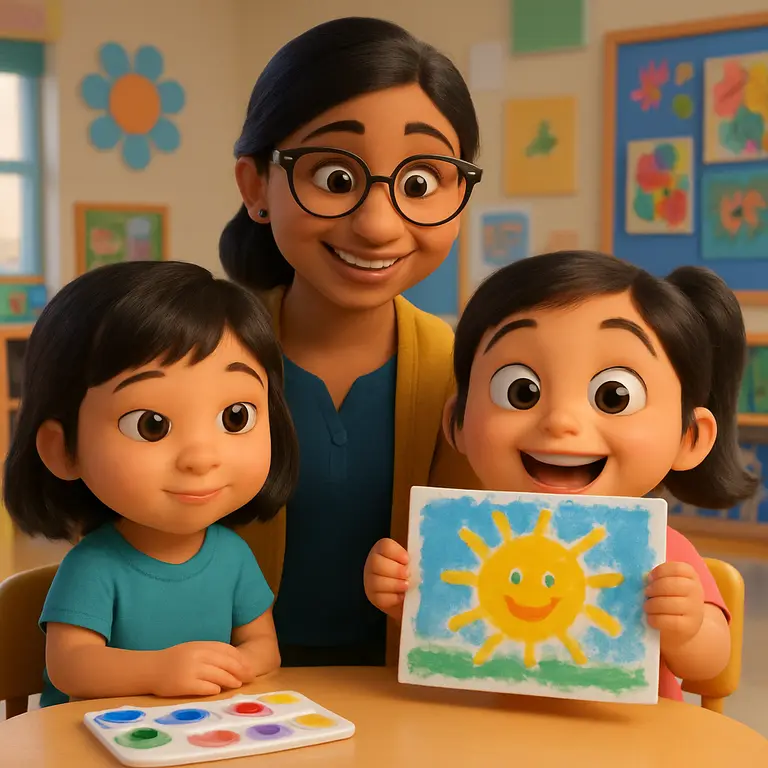
    At school, Emma meets up with Olivia, who is excited to show her a new painting she made. Emma's teacher, Mrs. Patel, joins in and asks the girls to talk about their feelings. Olivia shares that she felt proud of her painting, while Emma talks about her mixed emotions from earlier. Mrs. Patel listens and offers words of encouragement.

  4. Feeling My Emotions — page 4

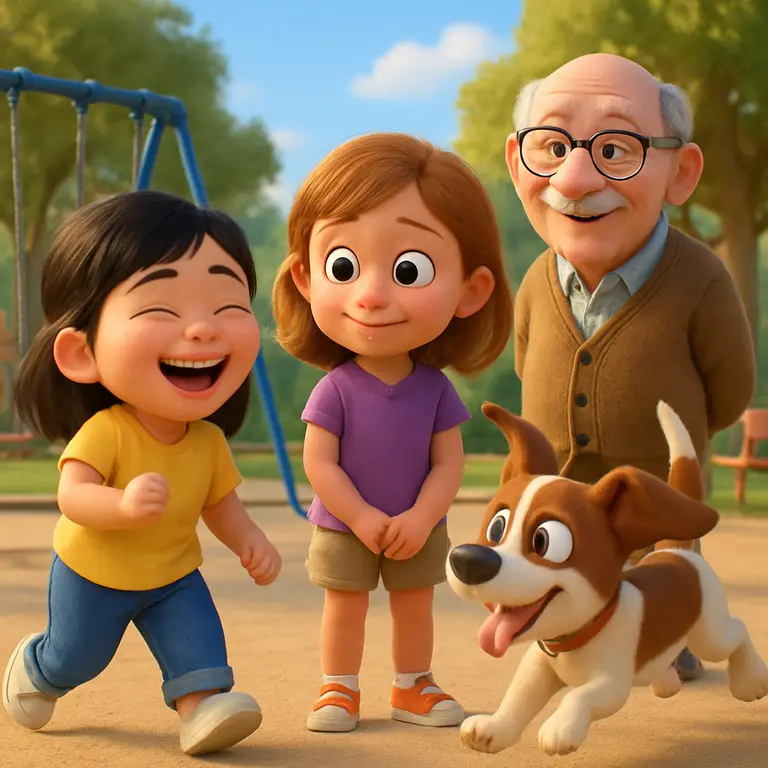
    During recess, Emma's class goes to the playground. Emma's neighbor, Mr. Jenkins, is there with his dog, Max. Max is a friendly golden retriever who loves playing fetch. Emma watches as Max runs around and feels a bit better. 'I think I'm feeling happier now,' Emma says to Olivia.

  5. Feeling My Emotions — page 5

    As the day comes to a close, Emma reflects on her emotions. She realizes that it's okay to feel different emotions and that talking about them helps. Emma's mom asks her how she's feeling now, and Emma replies, 'I'm feeling happy and relieved. I'm glad I could talk to you and my friends about my feelings.'

  6. Feeling My Emotions — page 6

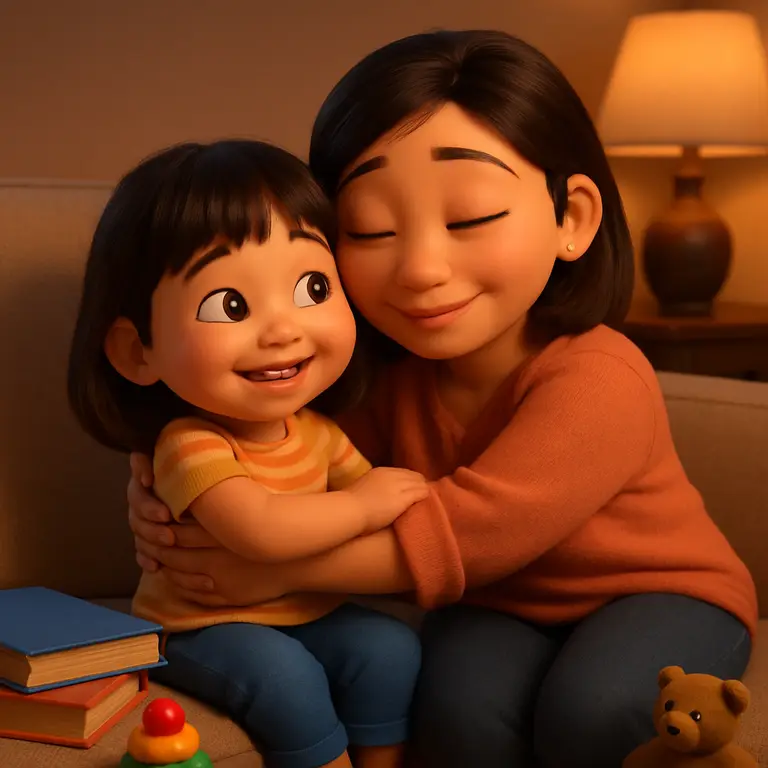
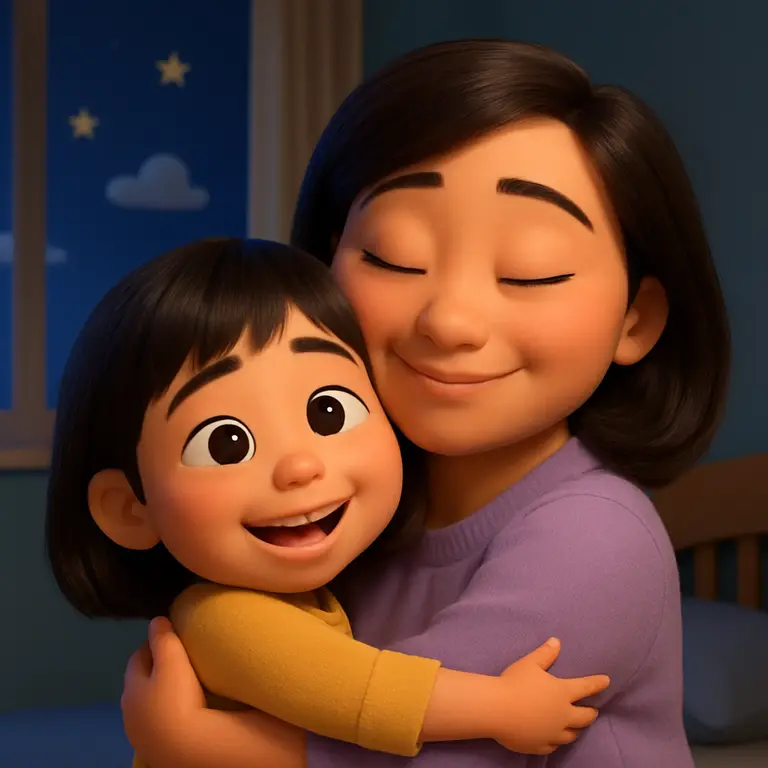
    Emma's mom is proud of her for recognizing and expressing her emotions. 'You're very brave, Emma,' she says. 'Remember, it's always okay to talk about your feelings.' Emma smiles, feeling more confident and happy. 'I'll remember, Mom,' she says. 'And I'll keep talking about my feelings.'

Why is it hard for your child to say what they feel?

Young children feel a lot, and intensely, but they don't yet have words for most of what goes on inside. An "I don't know what's wrong" can be sadness, tiredness, fear or several things at once. When they can't find the word, the feeling comes out another way: tears, anger, a meltdown or withdrawing.

UNICEF frames this as emotional intelligence: it matters that your child learns to name their feelings, and that you listen with empathy and without judgment. When your child shows a feeling without words, you can help them name it: happy, sad, scared, proud, angry, embarrassed.

The CDC adds something many parents find reassuring: children may have several emotions at the same time. Knowing that's normal is already a relief.

How to read this story with your child

  1. Read it at a calm moment, such as bedtime, when there's time to talk.
  2. Notice the beginning. Emma tells her mom she feels "funny" and doesn't know what's wrong. Ask: "Have you ever felt something and not known what it was?"
  3. Point out what her mom does. She asks what "funny" means and waits while Emma thinks. Emma realizes she's happy about seeing Olivia and sad about a bad dream. Her mom says it's okay to feel more than one emotion at a time.
  4. Talk about Mrs. Patel's question. At school, the teacher asks the girls how they feel: Olivia feels proud of her painting. Ask your child: "What made you proud today? What made you sad?"
  5. End like the story does: Emma realizes talking about her feelings helps, and her mom tells her it's always okay to talk about them. Say it to your child too, in your own words.

What to say and what to avoid

What to sayWhat to avoid
"It looks like you're sad. Is that right?""Don't cry, it's nothing."
"You can feel happy and sad at the same time."Telling them what they "should" feel.
"That happens to me sometimes too."Laughing at what they feel.
"Can you draw it for me?"Quizzing them when they don't want to talk.
"Thank you for telling me."Praising only the happy feelings.

What else helps children recognize emotions?

  • Name emotions in everyday life, including your own: "I'm a bit nervous because we're late." The CDC recommends saying them out loud in simple words.
  • A feelings chart with faces on the fridge, to point at when words won't come.
  • The color zones game suggested by the American Academy of Pediatrics: blue, green, yellow and red, with a face drawn for each one.
  • Accept every emotion: the CDC advises accepting sad or difficult feelings too, and setting limits only on behavior.
  • Name it, then meet the need: Dr. Prachi Shah, writing in HealthyChildren.org, describes noticing the feeling, naming it, acknowledging it and then addressing what your child needs.

If the feeling that overwhelms your child most is anger, our social story about anger may help.

When does a personalized story help even more?

Some children find it hard to relate to a character who does not look like them. With NeuroStories you can create an "A challenge" story about the feeling your child finds hardest to recognize, or the moment it shows up, with your child as the hero and their family as cartoons: first-day nerves, sadness about a friend moving away or jealousy of a sibling. Reading it together helps them put a name to it and see themselves finding what to do. It is the idea behind social stories: preview what will happen and show, step by step, how to handle it.

Frequently asked questions

Why does it matter that my child can name their emotions?
Because a feeling with a name is easier to understand and manage. UNICEF explains that learning to name feelings is part of emotional intelligence. A child who can say "I'm angry" or "I'm scared" has an alternative to showing it only through tears, hitting or tantrums.
How do I teach my child to recognize their feelings?
The CDC suggests five steps: notice the emotion, connect with your child, listen, name it out loud in simple words ("Are you feeling angry?") and find good solutions together. A feelings chart with faces can help younger children.
Is it normal to feel several emotions at once?
Yes. The CDC notes that children may have several emotions at the same time, like being happy to see a friend and sad about a bad dream. Help your child name each one separately; it explains why they feel "funny".
Should I try to stop my child from feeling sad or angry?
No. The CDC advises accepting all of your child's emotions, not just the positive or happy ones, and limiting the behavior rather than the feeling: "It's ok to feel angry, but it's not ok to throw our blocks." Children learn what to do with an emotion, not how to stop feeling it.
What games help children learn about emotions?
The American Academy of Pediatrics suggests, among others, a color zones game: blue for sad, green for calm, yellow for anxious or silly, and red for angry. Your child draws a face for each color and, when they're in the red zone, you think together about how to get back to green.

Sources and further reading

Stories are a supportive family tool and do not replace professional advice. If something worries you, talk to your pediatrician or a specialist.