Why does your child get so angry?
Anger is a normal, useful emotion: it signals that something is wrong. The trouble is that it hits young children very hard, before they have the tools to let it out without hurting anyone. The American Academy of Pediatrics puts it simply: young children lack the self-control to express anger peacefully, which is why they sometimes hit, bite, kick or yell.
It is not bad behavior on purpose. Managing anger is a skill children learn, like talking or tying their shoes, and they learn it mostly by watching the adults around them.
That is why this story doesn't tell your child not to get angry. It shows them what they can do with the anger.
How to read this story with your child
- Read it at a calm moment, never right after an outburst. Mid-meltdown is not the time for lessons.
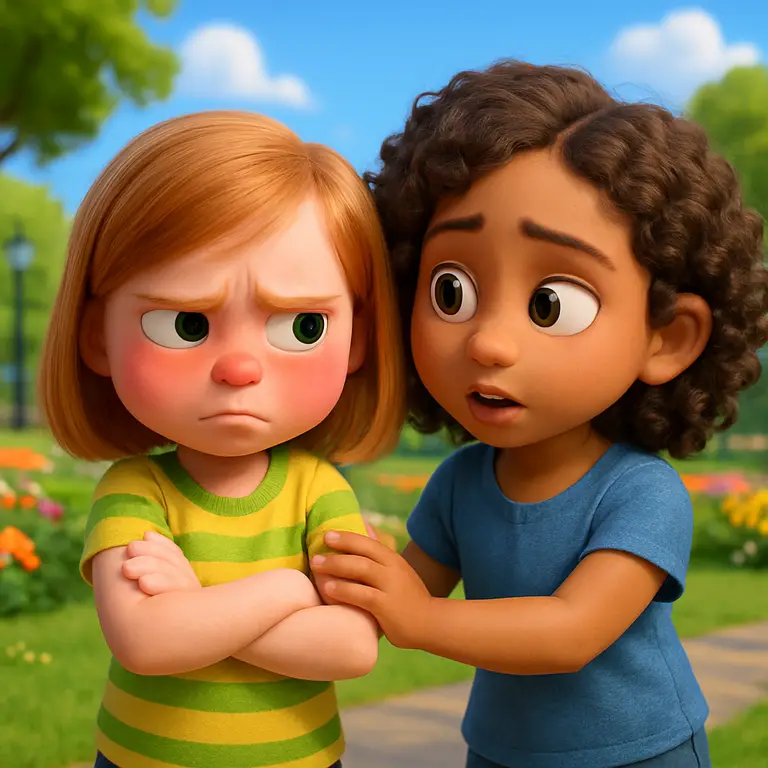
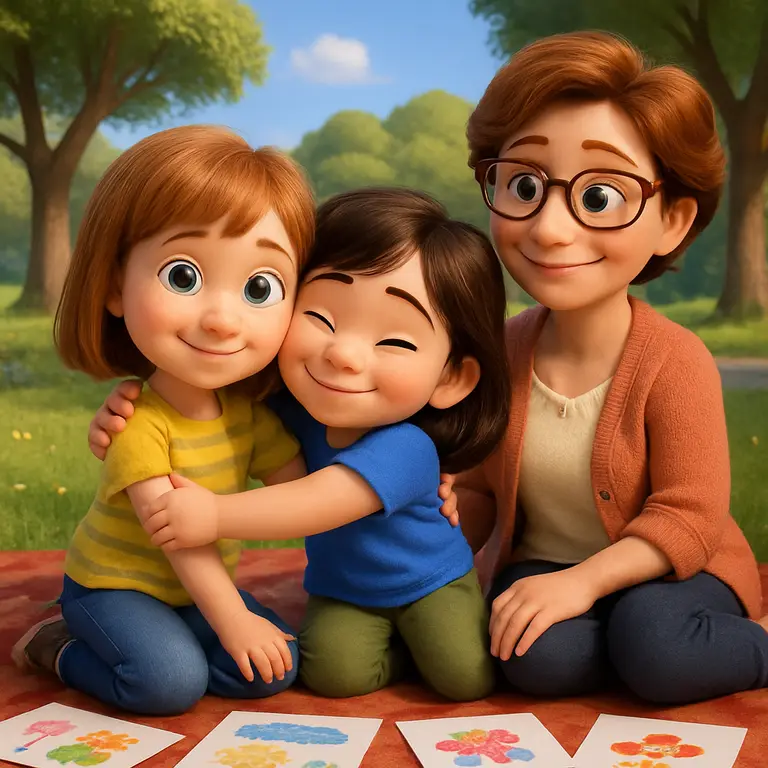
- Notice the beginning. Emma is playing in the park when anger takes over and she stamps her foot. Ask: "What makes you angry?" Knowing the triggers helps prevent them.
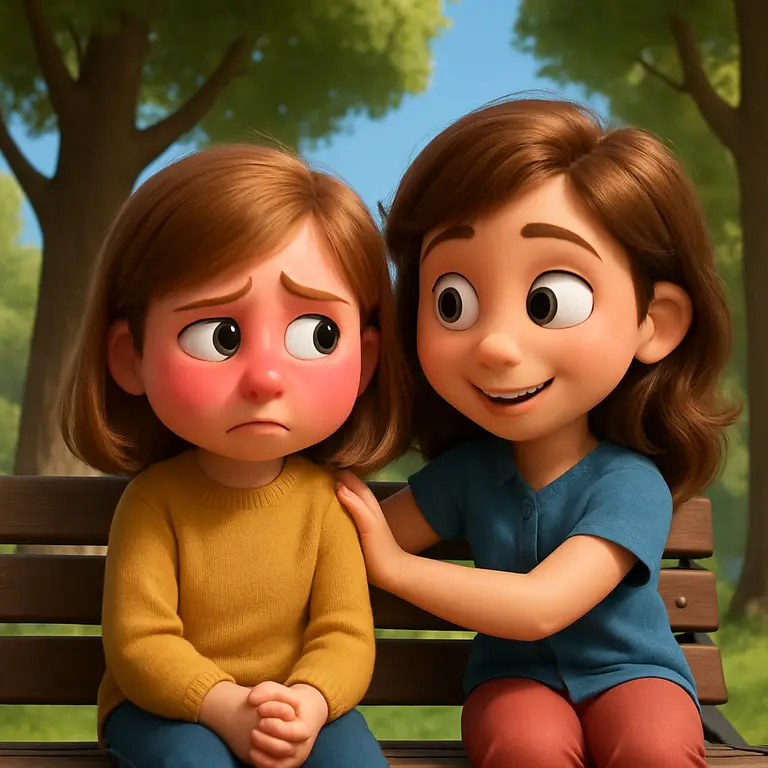
- Point out what Olivia does. She doesn't scold Emma: she suggests taking deep breaths together. Practice "inhale, exhale" with your child, like they do in the story.
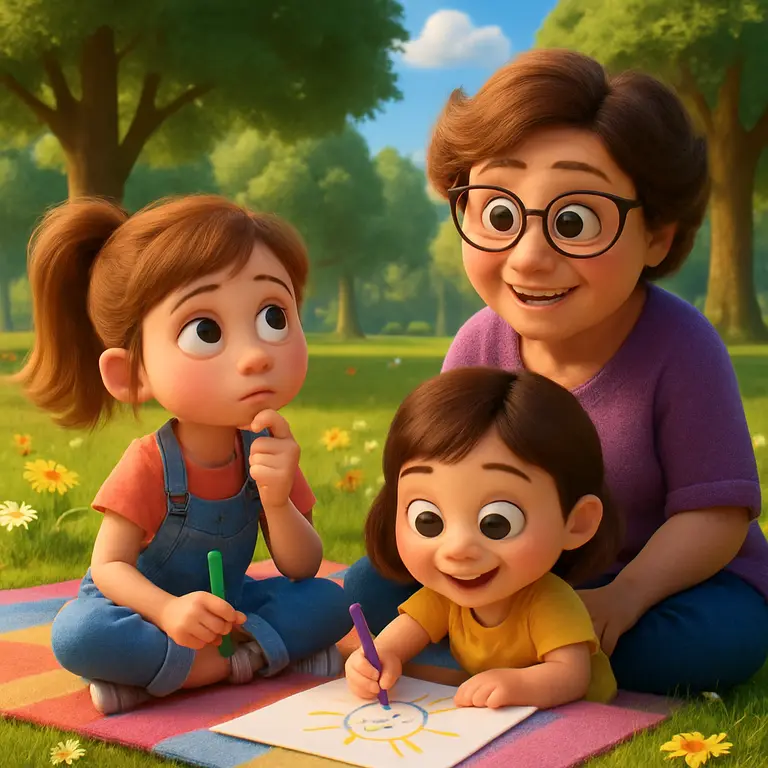
- Draw the anger, like Emma. She draws a big red angry cloud and starts to feel better while she draws. Ask your child to draw theirs: what color is it? Is it big or small? Giving it a shape helps give it a name.
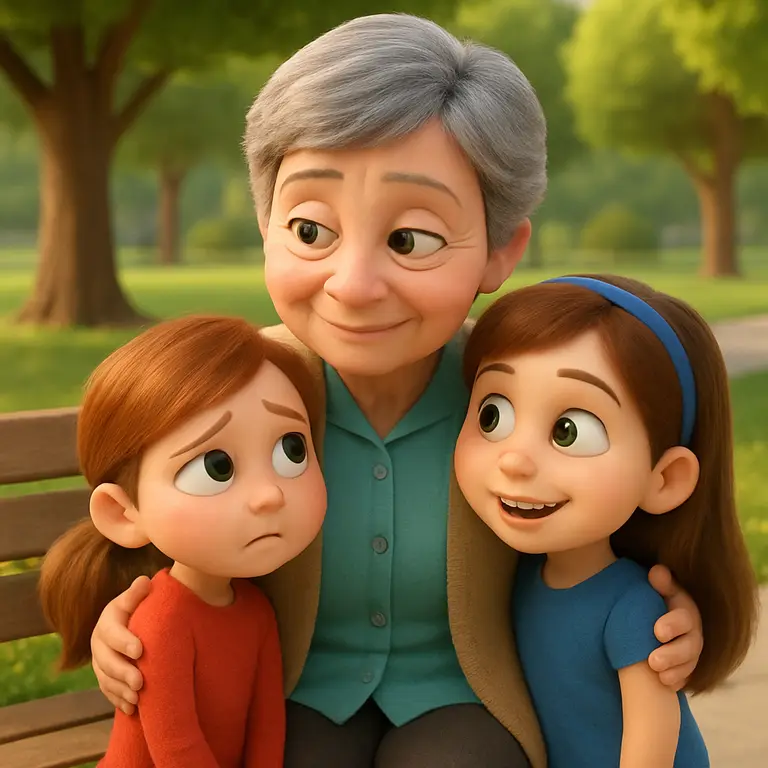
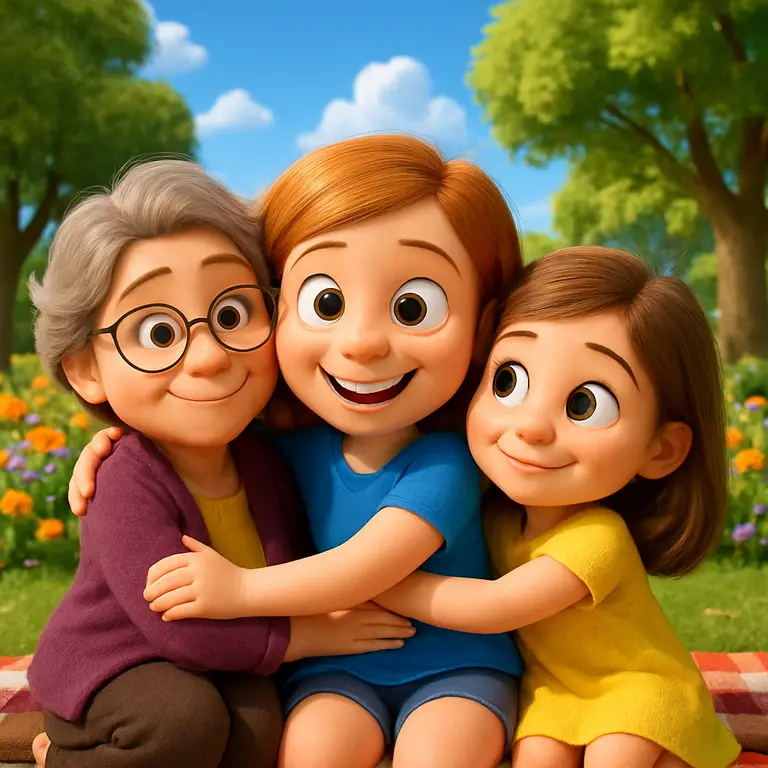
- End like the story does: Mrs. Thompson says it's okay to feel angry or sad, and that it also matters to know how to calm down. Agree together on who your child can go to when they're angry, at home and at school.
What to say and what to avoid
| What to say | What to avoid |
|---|---|
| "You're really angry because the tower fell." | "Stop being angry over nothing." |
| "It's okay to be angry, but it's not okay to hit." | Yelling at them to stop yelling. |
| "I'm here. Let's breathe together." | Long explanations mid-outburst. |
| "Can you draw me how you feel?" | Hitting or threatening them to make it stop. |
| "You calmed yourself down. Well done!" | Noticing only what went wrong. |
What else helps with anger?
- Be the model. The AAP notes that if you express your own anger quietly and peacefully, your child will probably follow your example. The CDC suggests parents pause and take a few deep breaths before responding.
- Name it: the CDC suggests noticing the emotion, naming it out loud in simple words and accepting it, while limiting the behavior.
- Emotion coaching: in HealthyChildren.org, Dr. Prachi Shah describes noticing the feeling, naming it, acknowledging it and then addressing the need: "It seems like you're angry because we have to leave the playground."
- Time-in: stay by your child's side while they calm down, instead of leaving them alone.
- Praise calm: the AAP recommends noticing when your child solves something without hitting or yelling, so they repeat what works.
If anger shows up mostly when screen time ends, our story for tantrums may help. And if your child struggles to recognize what they feel, try our social story about feelings.
When does a personalized story help even more?
Some children find it hard to relate to a character who does not look like them. With NeuroStories you can create an "A challenge" story about the situation that makes your child angriest, with your child as the hero and their family as cartoons: losing a game, sharing with a sibling or leaving the park. Reading it at a calm moment lets your child rehearse what to do and see themselves succeeding. It is the idea behind social stories: preview what will happen and show, step by step, how to handle it.