


Why is focusing in class so hard for your child?
Sitting for hours, listening and waiting your turn is one of the hardest things we ask of young children. Most struggle with it at some point: they are tired, something is worrying them or the task is boring. HealthyChildren.org, from the American Academy of Pediatrics, puts it plainly: it is normal for all children to show some ADHD symptoms from time to time.
For other children the difficulty is more constant. The CDC lists possible ADHD symptoms such as daydreaming a lot, squirming or fidgeting, being easily distracted and having trouble following instructions, and makes clear that only a professional can assess them. With or without a diagnosis, what helps is the same: understanding that your child is not doing it on purpose, and giving them tools.
A child who gets up, talks or drifts off in class often hears many times a day that they are doing it wrong. This story tells them a different one: about someone who finds it hard, gets support and improves.
How to read this story with your child
- Read it at home at a calm moment, not right after a bad report or a note from school.
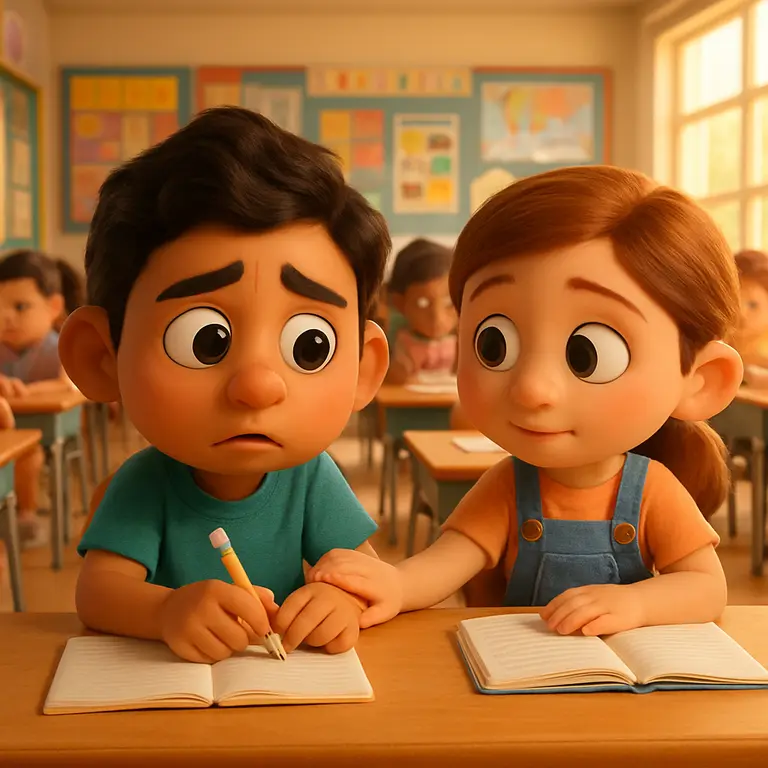
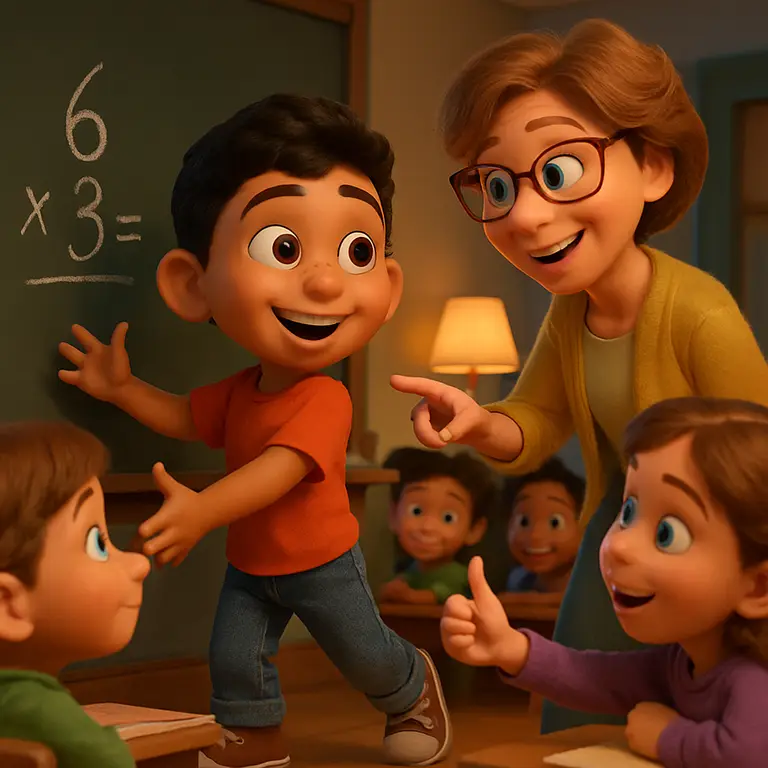
- Notice what Mrs. Thompson does. She sees Carlos struggling and, instead of scolding him, gives him a job: helping her show a math problem at the front. Later she tells him it is okay to have trouble focusing and that they will find ways to help together. Ask your child: "Are there times in class when it's hard to sit still? When?"
- Practice the brain breaks from the story: a few deep breaths and a quick movement, like stretching or jumping jacks. Do them together at home so they come naturally when needed.
- Talk about friends who help. Emma breathes with Carlos and cheers him on. Who could be your child's Emma in class?
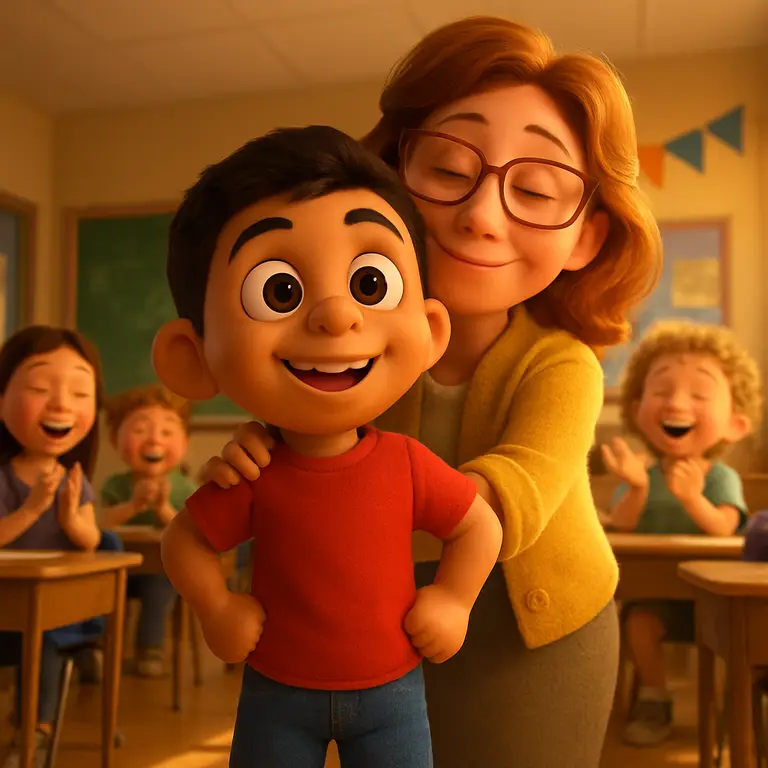
- End like the story does: Carlos stays focused for a whole lesson and the class cheers. Remind your child of something they do well, so they don't see themselves only through what is hard.
What to say and what to avoid
| What to say | What to avoid |
|---|---|
| "Sitting still can be hard. Let's find what helps you." | "You're just not trying." |
| "When you feel distracted, take deep breaths like Carlos." | Taking away recess, when they need to move most. |
| "First this worksheet, then a stretch break." | Giving lots of instructions at once. |
| "You finished the whole task today. Well done!" | Noticing only what goes wrong. |
| "Shall we tell your teacher what helps at home?" | Comparing them with siblings or classmates. |
What else helps at school and at home?
- Movement breaks. The CDC notes that classroom physical activity, as short breaks or within lessons, can improve concentration and reduce fidgeting.
- Clear, short tasks with a visible start and finish. Among classroom supports, the CDC lists clear tasks, positive feedback, breaks and fewer distractions.
- Immediate, specific praise for what goes well: "You waited your turn to speak."
- A spot with fewer distractions, away from the window or the door, in class and at homework time.
- Work with the school: if home and class use the same words and the same breaks, your child learns them faster.
If the hardest part is stopping one activity to start another, our story for transitions may help too.
When does a personalized story help even more?
Some children find it hard to relate to a character who does not look like them. With NeuroStories you can create an "A challenge" story about the part of the school day that is hardest, with your child as the hero and their family as cartoons: circle time, homework or the first day with a new teacher. Reading it beforehand lets your child rehearse the situation and see themselves getting through it. It is the idea behind social stories: preview what will happen and show, step by step, how to handle it.