

Why is potty training scary for some toddlers?
Potty training is not only about learning to notice the urge. Your child also has to sit on something new and high, with a hole in it and a loud whoosh when it flushes. For a 2- or 3-year-old, that can feel like a lot.
HealthyChildren.org, from the American Academy of Pediatrics (AAP), explains that some children believe their pee and poop are part of their body and worry that the toilet will flush part of them away. Others fear being pulled in if someone flushes while they are sitting down. These fears make sense to a toddler, even if they sound unlikely to us.
Timing matters too. According to the AAP, the average age toilet training begins in the US is between 2 and 3, and most children are trained by age 4. Nemours KidsHealth adds that the process often takes 3 to 6 months, and that stress, such as a new baby in the family, can bring back accidents. Every child gets there at their own pace, and a fear that shows up along the way is part of learning, not a sign that something is wrong.
How to read this story with your child
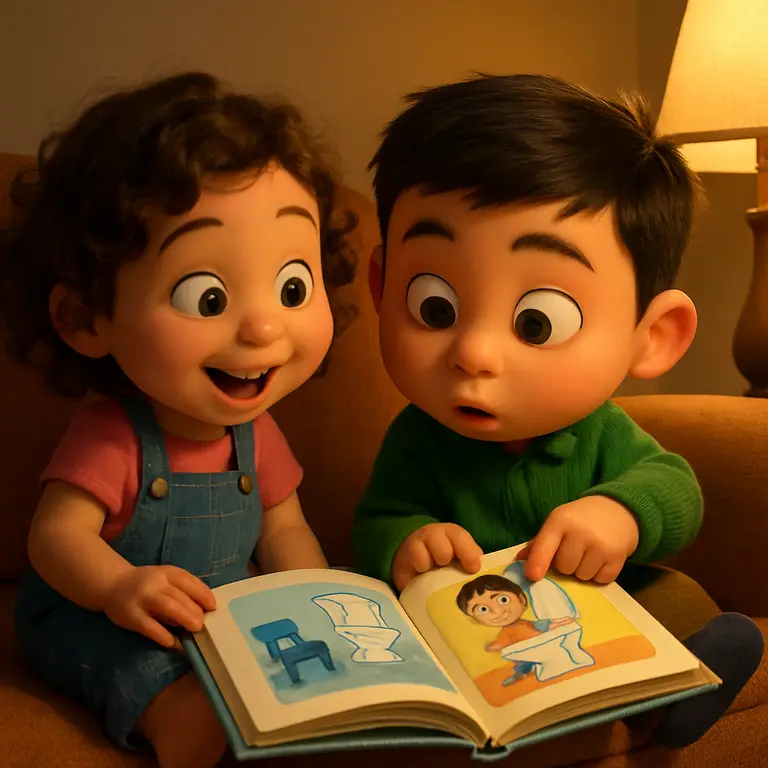
- Read it before you start, at a calm moment and outside the bathroom, so your child meets the situation before living it.
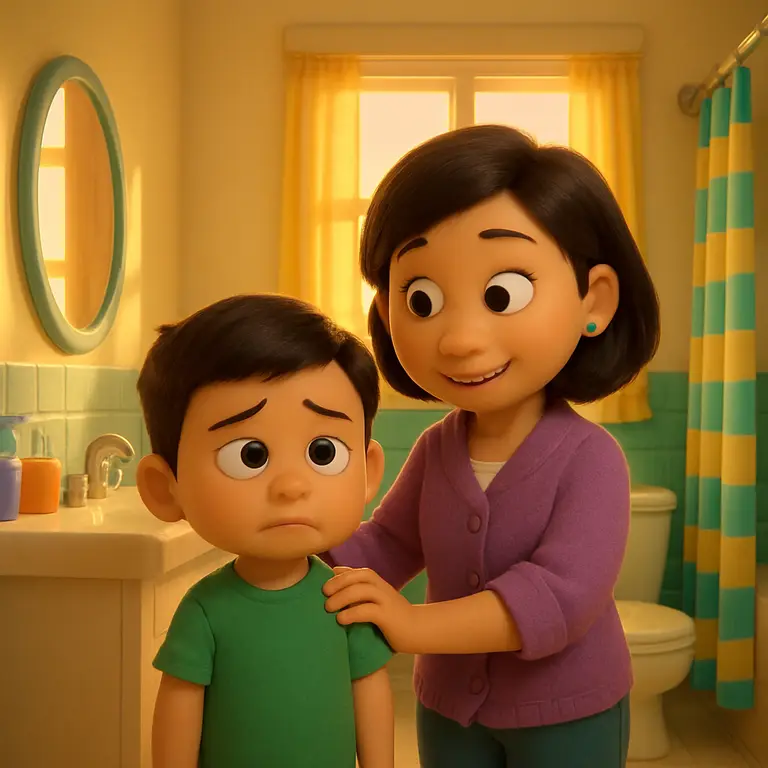
- Name Benny's feelings: "He feels a bit scared and unsure. Have you ever felt like that?" If your child recognizes themselves, let them talk.
- Talk about Emma. Benny's best friend was scared too, and her mom helped her practice. Knowing other kids felt the same is reassuring.
- Copy the deep breath. Before he tries, Benny takes a deep breath. Practice it together on the couch, then in the bathroom.
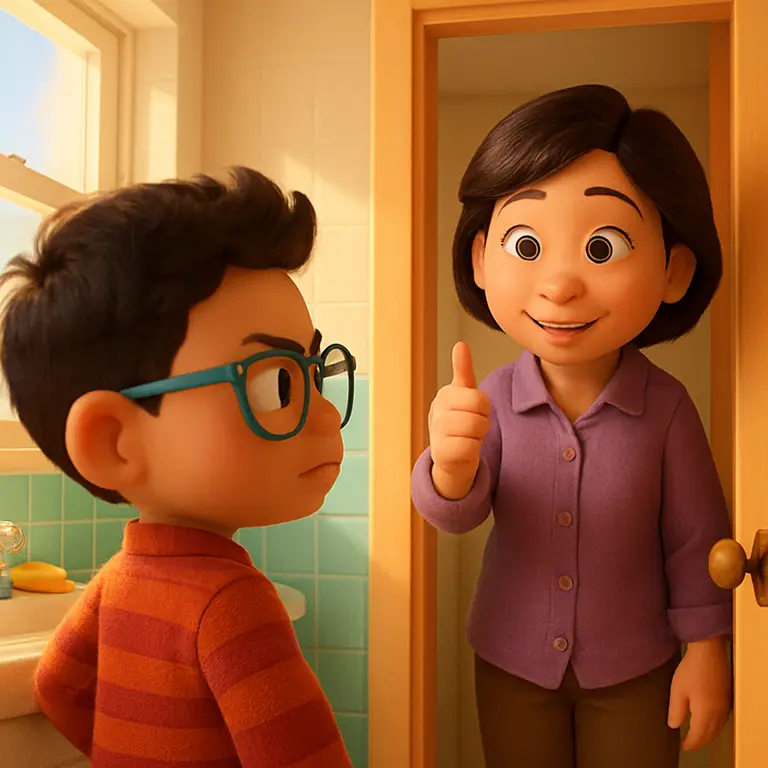
- Point out the safety line. Benny's mom says he can always ask for help. Agree on how your child will ask: a word, a call or a sign.
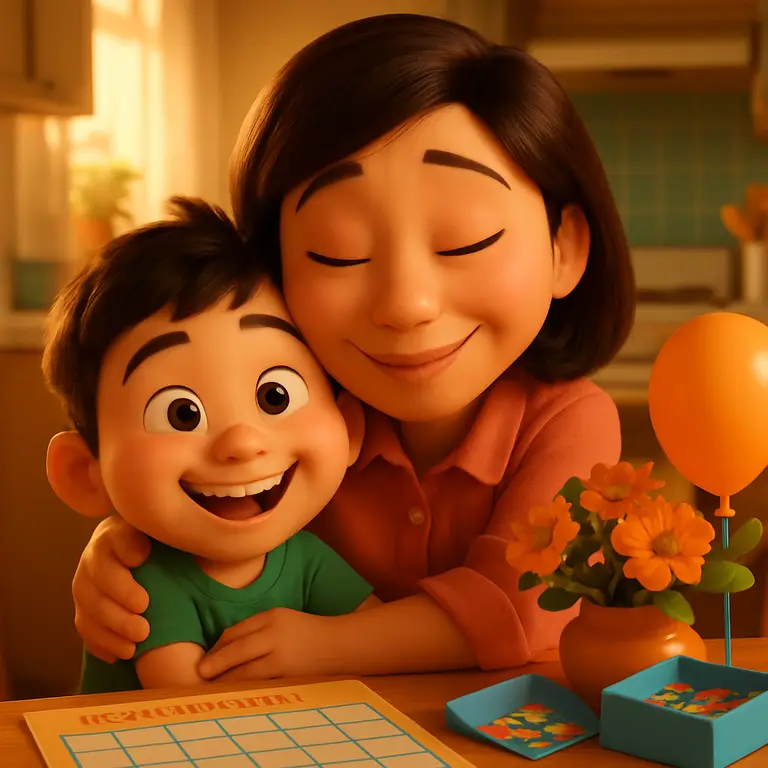
- Celebrate the step, not the result. Benny gets a hug, a sticker and a proud grandma. Talk about who your child would like to tell about their own big step.
What to say and what to avoid
| Try saying | Try to avoid |
|---|---|
| "It's OK to feel a little scared. I'm right here." | Making your child sit on the toilet against their will. |
| "Want to try sitting with your clothes on first?" | Begging, rushing or power struggles. |
| "Great job trying, even if nothing came out." | Punishing, scolding or showing disappointment after an accident. |
| "Do you want to flush when you're done?" | Comparing them with siblings or cousins. |
Small changes that help
- A stable potty chair or toilet seat insert. With a step stool, your child's feet are supported and they don't fear falling in.
- Practice dressed first. KidsHealth suggests your child can start by sitting on the potty wearing clothes or a diaper, then go bare-bottomed when ready.
- Let them see you. Both KidsHealth and the AAP recommend letting your child watch you use the toilet and wash your hands.
- Let them flush. The AAP suggests letting your child flush the toilet to give them a feeling of control. If the sound still worries them, they can stand up, step back and press the handle together with you.
- A simple routine: a few minutes on the potty first thing in the morning or after meals, and let them get up when they want.
- Positive words. The AAP suggests avoiding words like "dirty" or "stinky" for pee, poop and body parts.
- Everyone on the same page. KidsHealth recommends that grandparents and child care staff follow the same routine and use the same words, just like Benny's grandma cheering him on.
When a personalized story helps even more
Benny has his mom, his grandma and his friend Emma. Your child has their own people. In NeuroStories you can create this same story with your child as the hero, their potty or toilet seat and the person who helps them, all as cartoons, using the "A challenge" mode. Seeing themselves sit down without fear makes the step feel familiar before they take it.
It is the idea behind social stories: preview the situation and show how to handle it. If you are building other bathroom routines, try our tooth brushing story too.