




All stories

Change and transitions · · 6 min read

A Social Story for Unexpected Changes: When Your Child's Routine Changes

A social story for unexpected changes helps your child cope when a routine changes by showing, through a character like them, what the change feels like and what to do: name the worry, lean on a trusted adult and notice what stays the same. It works best read at a calm moment, before a change, alongside clear warnings.

The story: «Benny's New Route»

A real story from the NeuroStories library. Read it with your child as it is, or create it in the app with their name, your family as cartoons and the exact situation you are going through.

  1. Benny's New Route — page 1

    Benny loved his daily walk to school. He would always take the same route with his mom. One day, his mom said they had to take a different route because of construction. Benny felt worried and said, 'I don't want to take a new route, I like the old one!'

  2. Benny's New Route — page 2

    His mom explained that sometimes change can be good and they might discover new things. She introduced Benny to their neighbor, Mrs. Thompson, who was a great explorer. Mrs. Thompson said, 'I can show you all the new things we can find on this route!' Benny's curiosity started to grow.

  3. Benny's New Route — page 3

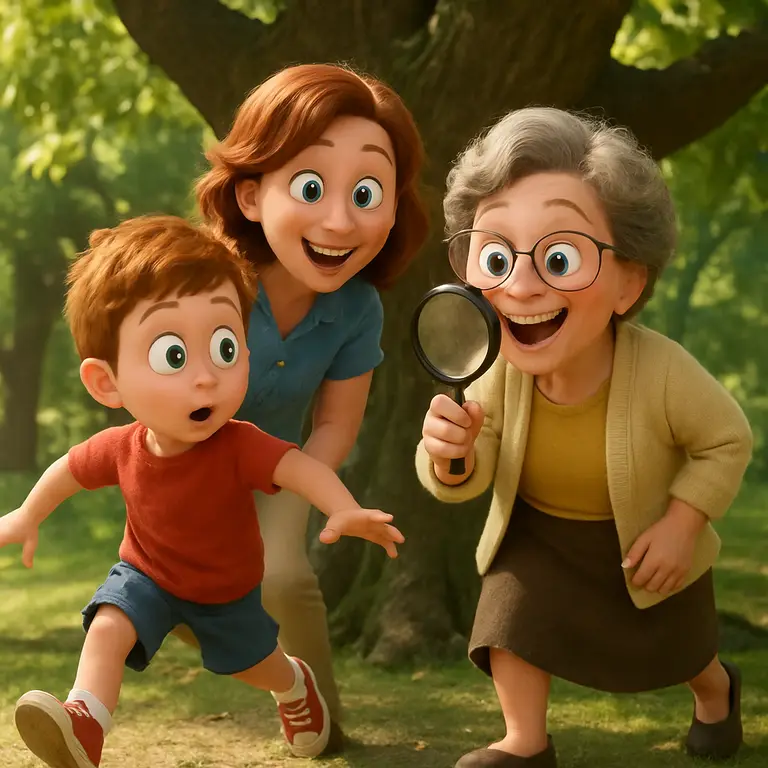
    As they walked, Mrs. Thompson showed Benny all sorts of interesting things like birds' nests, colorful flowers, and different types of leaves. Benny started to enjoy the new route and said, 'Wow, I never knew our neighborhood had so many cool things!'

  4. Benny's New Route — page 4

    Benny realized that even though the new route was different, it was also exciting. He felt proud of himself for trying something new. His mom gave him a big hug and said, 'I'm so proud of you, Benny, you're very brave!'

  5. Benny's New Route — page 5

    The next day, Benny decided to take the new route again, this time with his best friend, Emma. He showed her all the cool things Mrs. Thompson had shown him. Emma was impressed and said, 'This route is way more fun than the old one!'

  6. Benny's New Route — page 6

    Benny learned that sometimes change can lead to new adventures and new friends. He felt happy and said, 'I'm glad we took the new route, it's my favorite now!' His mom smiled and said, 'I'm glad too, sweetie, you're growing up to be very brave and open-minded.'

Why are unexpected changes so hard for kids?

For a young child, knowing what comes next is a way of feeling safe. Pediatrician Shelly Vaziri Flais puts it simply on the American Academy of Pediatrics' HealthyChildren.org: children do best when routines are regular, predictable and consistent. When the playground is closed, a trip is canceled or the walk to school changes because of construction, that predictability disappears all at once. What feels like a small detail to an adult can feel to your child like losing control of their day.

For some children this need is stronger. The CDC lists "gets upset by minor changes" and "must follow certain routines" among examples of behaviors that can be seen in autism. The National Autistic Society explains that many autistic people use routines to stay calm, reduce anxiety and manage unpredictability, and that if a routine is not causing any harm, there is no need to change it. So this story is not about getting your child "used to" surprises. It is about giving them tools for when surprises come.

If a change ends in tears or a meltdown, it is not a whim or bad behavior. It is your child's way of saying something has overwhelmed them.

How to read this story with your child

  1. Read it at a calm moment, ahead of a change you know is coming (a move, a new schedule, a vacation), not in the middle of a hard moment.
  2. Name what Benny feels. When his mom says they need a different route, he feels worried and says he likes the old one. Ask: "What worries you when plans change?" Sometimes the answer is surprising, and something you can solve.
  3. Point out what helps Benny: his mom explains why the route changed (construction) and stays with him, and their neighbor, Mrs. Thompson, turns the walk into a search for new things. The people who stay the same make the change easier to carry.
  4. Play "spot something new", like Benny with the birds' nests, flowers and leaves. On your next change of route, try to find three things you have never noticed before.
  5. Notice the ending: the next day Benny chooses the new route himself and shows it to his friend Emma. Choosing and sharing helps a change start to feel like his own.

What to say and what to avoid

What to sayWhat to avoid
"There's a change today: the park is closed. We'll go to the library."Making changes without warning "so they won't worry."
"You're worried because it's new. I'm right here.""It's not a big deal" or "Stop overreacting."
"First the library, then home, like always."Long explanations in the middle of a meltdown.
"Want to look for three new things on the way?"Piling several changes into one day.
"If plan A doesn't work, we have a plan B."Promising that nothing will ever change.

What else helps with unexpected changes?

  • Prepare ahead whenever you can: in simple words, with a calendar or with a "first, then" picture schedule. The National Autistic Society suggests preparing ahead, counting down to changes and using visual prompts.
  • Have a plan B (and a plan C). Deciding in advance what you will do if it rains or the playground is closed turns a surprise into something you already planned for.
  • Keep anchors: if the place changes, keep the snack, the stuffed animal or the car song the same.
  • Allow time to process. After you announce the change, wait a moment before asking your child to move.
  • Practice small, chosen changes: a different street to school, a different park on Saturday, decided together and at a calm time.

If the hardest part is stopping one activity to start another, our story for transitions may help too.

When does a personalized story help even more?

Some children find it hard to relate to a character who does not look like them. With NeuroStories you can create an "A challenge" story about the specific change coming up, with your child as the hero and their family as cartoons: the new way to school, a new classroom or a visit that gets postponed. Reading it before it happens lets your child rehearse the situation and see themselves getting through it. It is the idea behind social stories: preview what will happen and show, step by step, how to handle it.

Frequently asked questions

Why does my child get so upset when plans change?
Routines make the day predictable: your child knows what comes next. According to the American Academy of Pediatrics, children do best when routines are regular, predictable and consistent. An unexpected change breaks that, and worry, anger or tears are common reactions, especially when the change comes out of nowhere.
Is difficulty with change a sign of autism?
Not on its own: many children struggle with surprises. The CDC lists "gets upset by minor changes" among examples of behaviors that can be seen in autism, alongside differences in social communication and interaction. If you are concerned about the overall picture, talk to your pediatrician.
Should I always warn my child about changes?
Whenever you can, yes: early, in simple words and, if it helps, with pictures or a visual schedule. For last-minute changes, tell them as soon as you know, explain what stays the same and what comes next. Many children are calmed more by knowing the "next" than the "why."
Should I change routines on purpose so my child gets used to it?
Not through surprises. It helps more to practice small, announced changes when your child is calm and to let them help decide. The National Autistic Society notes that if a routine is not causing any harm, there is no need to change it. The goal is having tools ready for when change happens.
When should I talk to a professional?
If unexpected changes often lead to very intense meltdowns, if your child avoids going out in case something changes, or if the need for sameness limits daily life for them or the family, talk to your pediatrician. If your child already has a support team, share the story with them.

Sources and further reading

Stories are a supportive family tool and do not replace professional advice. If something worries you, talk to your pediatrician or a specialist.