

All stories

Sensory · · 6 min read

A Getting Dressed Social Story: When Clothes Bother Your Child

A getting dressed social story helps when clothes bother your child by showing, through a character like them, that the feeling is real, that they can put it into words and that there is a fix: finding something comfortable together. It works best read at a calm moment, the night before, alongside a small choice of clothes.

The story: «Getting Dressed with Ease»

A real story from the NeuroStories library. Read it with your child as it is, or create it in the app with their name, your family as cartoons and the exact situation you are going through.

  1. Getting Dressed with Ease — page 1

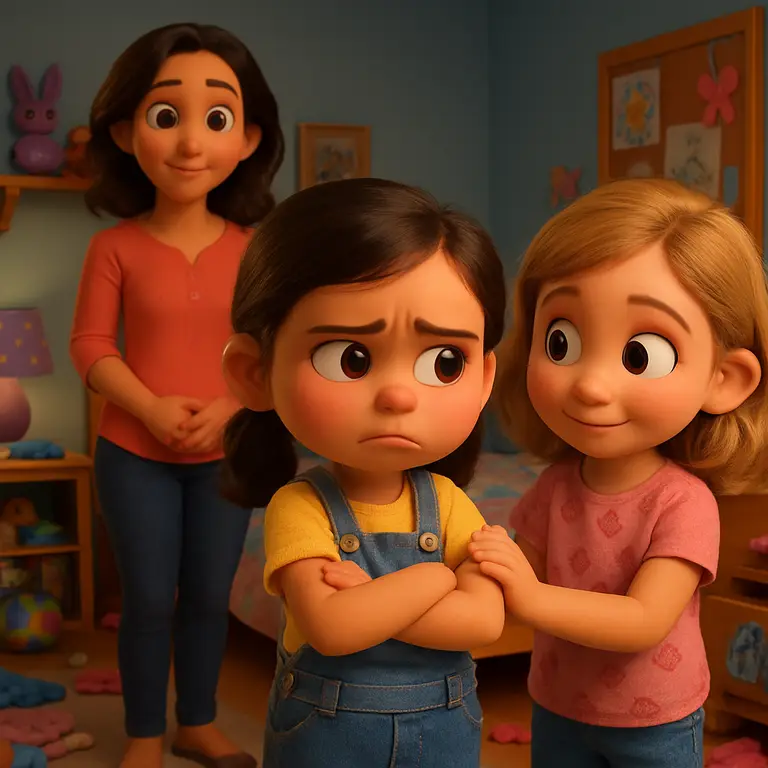
    Meet Emma, a bright and cheerful girl who loves playing outside. She has a big smile on her face, but today, she's feeling a bit frustrated. 'I don't want to wear this shirt, Mom!' she says. Her mom, Maria, is patiently sitting next to her, trying to understand what's wrong.

  2. Getting Dressed with Ease — page 2

    Emma's best friend, Olivia, comes over to play. 'What's wrong, Emma?' Olivia asks, noticing her friend's unhappy face. Emma explains that she doesn't like the feeling of the shirt her mom picked out. 'It's too scratchy,' she says. Olivia nods understandingly and says, 'I don't like scratchy clothes either!'

  3. Getting Dressed with Ease — page 3

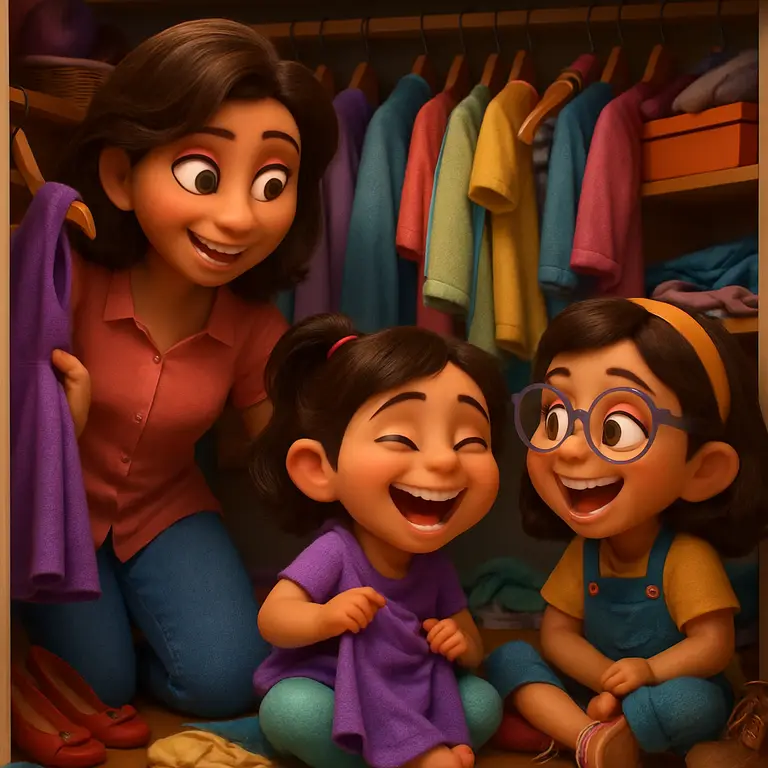
    Maria suggests they go through Emma's closet together to find a shirt that feels comfortable. 'Let's find something soft and cozy,' she says. Emma's face lights up, and she eagerly starts searching through her clothes. Olivia joins in, and they all start looking for the perfect shirt.

  4. Getting Dressed with Ease — page 4

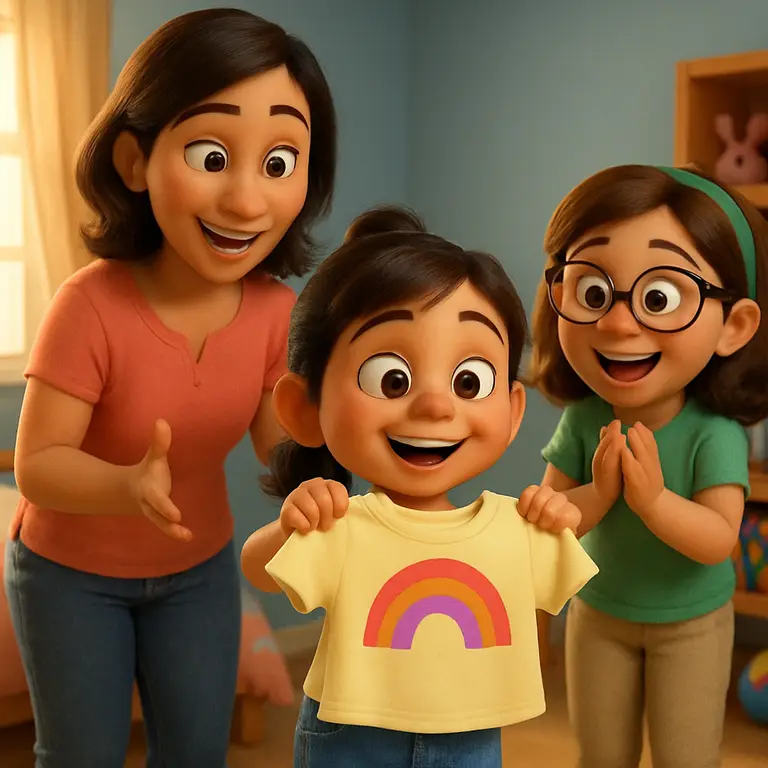
    After a few minutes of searching, Emma finds a favorite shirt that she loves. 'This one, Mom! This one feels so soft!' she exclaims. Maria and Olivia both smile, happy to see Emma excited about getting dressed. 'Great choice, Emma!' Maria says, giving her a hug.

  5. Getting Dressed with Ease — page 5

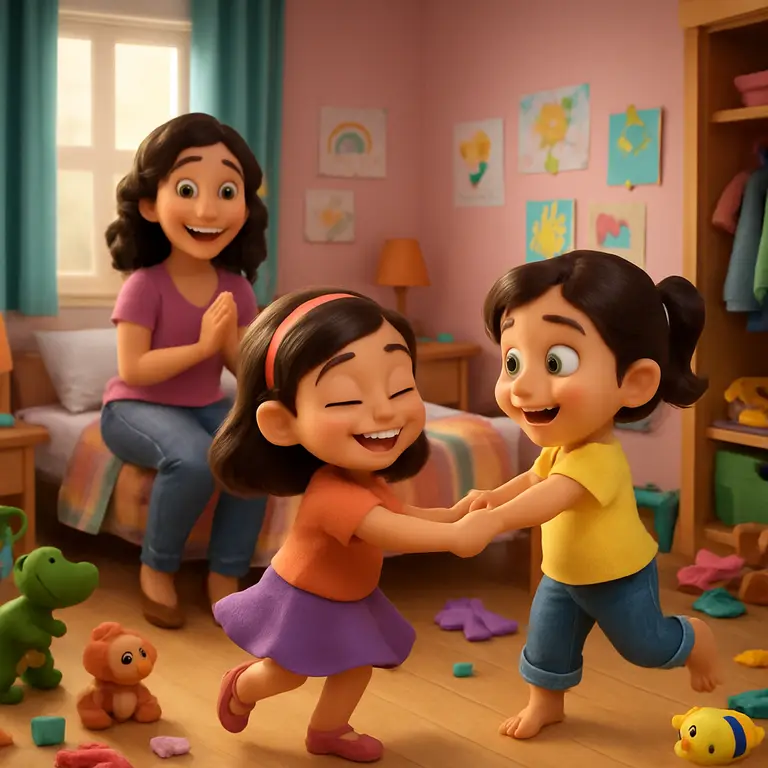
    With her new shirt on, Emma feels happy and confident. 'I'm ready to play now!' she says, twirling around the room. Olivia joins in, and they both start dancing and laughing together. Maria watches, feeling proud of Emma for overcoming her struggle with getting dressed.

  6. Getting Dressed with Ease — page 6

    Emma learns that it's okay to express her feelings and preferences, and that she can always find a solution with the help of her loved ones. 'Thank you, Mom, for helping me find a shirt that feels good,' she says, giving Maria a big hug. Olivia smiles, happy to have been a part of their special moment.

Why is getting dressed so hard for your child?

When a child says "I don't want to wear this", it is often not about the shirt itself but about how it feels on their skin. Some children feel touch far more intensely than adults do: a label rubbing the back of the neck, a sock seam or a wool sweater can feel almost unbearable. The Child Mind Institute lists an aversion to irritating clothes and tantrums at dressing time among the most common signs of sensory issues, and notes that they often appear in the toddler years.

These differences are common in autism. The National Autistic Society counts fabric textures, including clothing, among common touch triggers, and Raising Children Network adds that some children dislike labels inside clothes or will only wear loose-fitting clothing. The NAS also points out that these reactions often get dismissed as being "picky" or "fussy", which does not help.

So if getting dressed ends in tears or a meltdown every morning, it is not defiance: it is your child's way of saying something feels unpleasant, before they have the words to explain it.

How to read this story with your child

  1. Read it at a calm moment, such as the night before, not in the middle of the morning rush.
  2. Notice what Emma does. She says what is wrong: the shirt feels scratchy. Ask your child: "Are there any clothes that feel itchy or uncomfortable?" The answer is often very specific: a label, a collar, a sock.
  3. Point out that Emma's mom listens. Instead of insisting, Maria tries to understand what's wrong. Taking the feeling seriously does not mean skipping getting dressed: it means solving it together.
  4. Look at how they fix it: they go through the closet together looking for something "soft and cozy", and Emma finds a favorite that feels good.
  5. End like the story does: Emma is ready to play and thanks her mom. You can ask: "What are your comfiest clothes?" and remember the answer for next time.

What to say and what to avoid

What to sayWhat to avoid
"Which part bothers you? Show me.""That's not itchy, stop exaggerating."
"Do you want the blue shirt or the green one?"Opening the whole closet when you're in a hurry.
"Tonight we'll pick tomorrow's clothes."Arguing about clothes when you're already late.
"Let's cut this label off."Insisting on something that bothers them "so they get used to it".
"Great job, you got dressed!"Comparing them with siblings or cousins.

What else helps at dressing time?

  • Offer a small choice. Raising Children Network suggests letting your child pick from a couple of options, like two t-shirts, rather than the whole closet.
  • Choose clothes the night before and lay them out, so the morning starts without decisions.
  • Practice when nobody is rushed or tired, as Raising Children Network also recommends.
  • Use a picture guide: a sequence of drawings showing each step (underwear, pants, shirt, socks) gives order and predictability.
  • Shop with their sensory profile in mind: if your child always prefers cotton, loose fits or tagless clothes, buying with that in mind prevents many battles. Every child is different: some seek out tight-fitting clothes, others can't stand them.

If other sensations are hard for your child too, our haircut story or our story for kids afraid of loud noises may help.

When does a personalized story help even more?

Some children find it hard to relate to a character who does not look like them. With NeuroStories you can create an "A challenge" story about the piece of clothing or the moment that is hardest, with your child as the hero and their family as cartoons: a new school uniform, winter socks or a swimsuit for the pool. Reading it beforehand lets your child rehearse the situation and see themselves finding a solution. It is the idea behind social stories: preview what will happen and show, step by step, how to handle it.

Frequently asked questions

Why does my child hate wearing certain clothes?
Some children feel touch much more intensely: a label, a seam or a rough fabric can be genuinely unpleasant to them. The Child Mind Institute lists an aversion to irritating clothes and tantrums when you try to get them dressed among the common signs of sensory issues, which often show up in the toddler years.
Is refusing certain clothes a sign of autism?
Not on its own: plenty of children dislike some clothes. Sensory differences are common in autism, and the National Autistic Society lists fabric textures, including clothing, among common touch triggers. If you are concerned about the overall picture, talk to your pediatrician.
Is sensory processing disorder a real diagnosis?
The term is widely used, but it is not a standalone diagnosis. The American Academy of Pediatrics advises against diagnosing it on its own, because there is no accepted framework for it, and describes the research on sensory integration therapy as limited and inconclusive. What helps is noticing what bothers your child and asking for help if it limits daily life.
Should I make my child wear the clothes so they get used to them?
Not by force. Offering a choice between two comfortable options, picking clothes the night before and practicing when nobody is rushed or tired, as Raising Children Network suggests, works better. If a piece of clothing really bothers them, swapping it is not giving in: it removes an obstacle to getting dressed.
When should I talk to a professional?
If clothes cause very intense meltdowns every day, if your child tolerates only a handful of items or if it affects school, sleep or family life, talk to your pediatrician. An occupational therapist can assess your child's sensory profile and suggest specific supports.

Sources and further reading

Stories are a supportive family tool and do not replace professional advice. If something worries you, talk to your pediatrician or a specialist.